AI in dentistry can help analyze images, flag patterns, organize data, and support treatment planning, but it does not replace the dentist’s exam, judgment, consent discussion, or responsibility for care. Think of AI as a second set of analytical tools, not an independent clinician.
AI Dentistry Snapshot
AI may help dentists see, compare, measure, or explain findings, especially on images. A dentist still decides whether the finding is real, clinically important, urgent, and appropriate to treat.
What AI Is Doing in Dental Workflows
In dental settings, AI is often used for image analysis, charting support, risk detection, administrative workflows, patient communication, and treatment planning. The FDA’s artificial intelligence in software as a medical device overview describes AI and machine learning technologies as tools that can produce predictions, recommendations, or decisions based on data. In dentistry, that commonly means software that helps interpret radiographs, scans, photos, or large sets of clinical information.
The American Dental Association has also created standards work around artificial intelligence in dentistry, including guidance for image analysis systems. This matters because dental AI is only useful when the data are accurate, the tool is validated for its intended use, and the output is interpreted by a trained clinician.
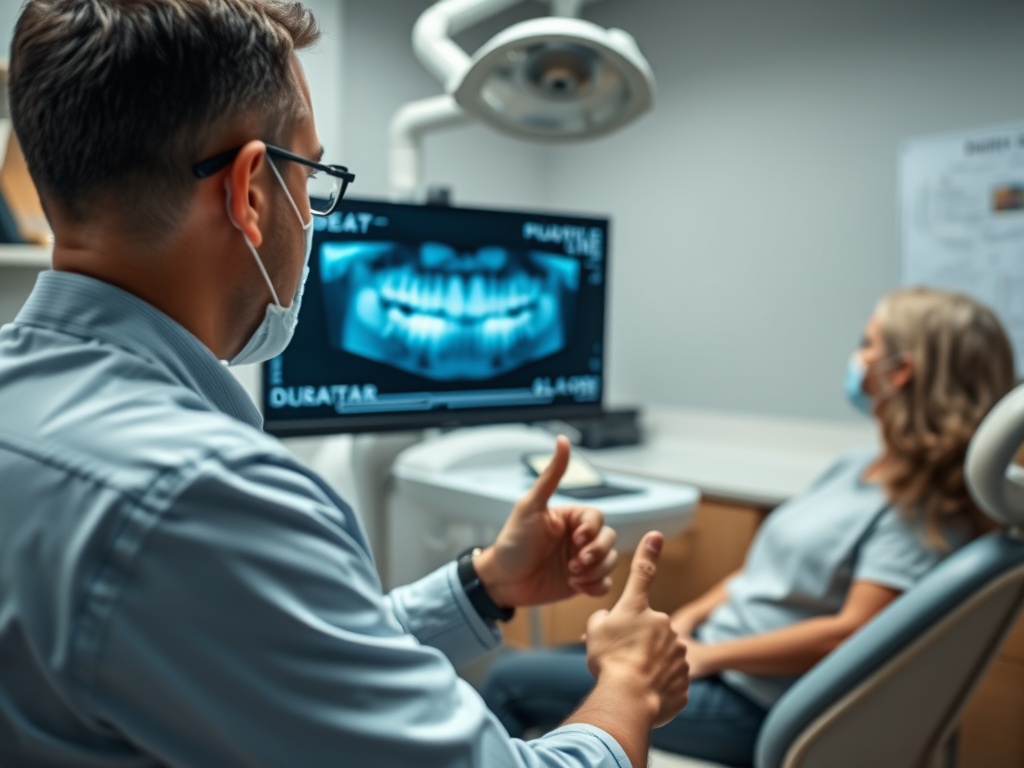
AI can highlight a possible cavity on an X-ray. It may help measure bone around implants, compare scans over time, or show areas that need a closer look. It can help a dentist explain findings visually. But the software does not know the full patient story by itself: symptoms, medical history, bite, gum condition, previous treatment, risk tolerance, finances, and goals.
What Changes for Patients
| Workflow area | How AI may help | What still requires the dentist |
|---|---|---|
| X-ray review | Highlights possible decay, bone loss, or changes | Confirms findings and decides if treatment is needed |
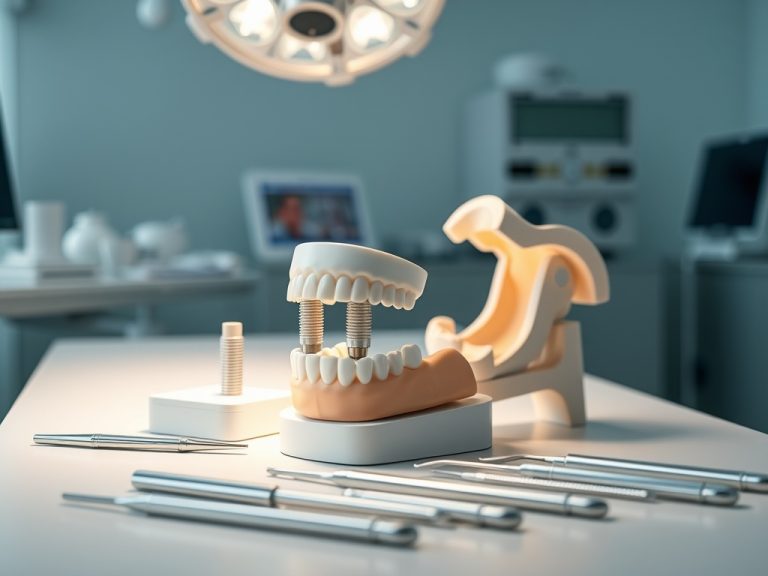
| Implant planning | Helps visualize bone and anatomy | Chooses the surgical and restorative plan |
| Orthodontics | Compares tooth movement and aligner fit | Judges biology, bite, compliance, and safety |
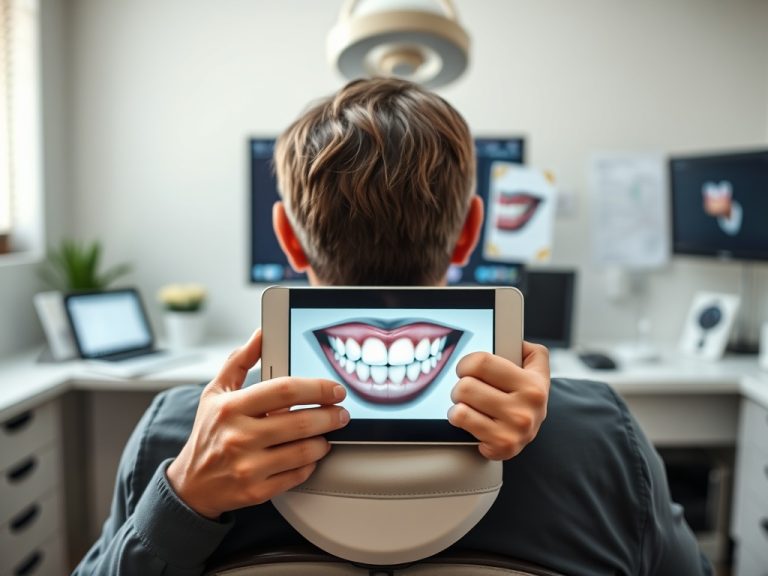
| Cosmetic planning | Simulates shape or shade possibilities | Explains irreversible changes and alternatives |
| Records and communication | Organizes notes or patient education | Ensures accuracy, consent, and individualized advice |
Patients may notice faster image review, clearer visuals, or more consistent tracking between visits. For example, AI-assisted imaging may support planning conversations for mini implants versus traditional implants when bone measurements and anatomy need careful review. In orthodontics, digital monitoring may help identify whether trays appear to be tracking, but it does not replace professional decisions about fit, gum health, or whether patients are cleaning appliances well, as explained in clear aligner care.
What Is Changing and What Is Still Standard
The changing part is the amount of digital support. More offices use intraoral scanners, 3D imaging, digital smile design, radiograph analysis, automated charting, and software-assisted planning. The ADA News discussion of standards for AI use in dentistry notes the need for responsible use, safety, effectiveness, transparency, and professional obligations.
The standard part is the dentist-patient relationship. A dentist still examines the mouth, reviews symptoms, considers medical history, discusses options, obtains informed consent, performs or supervises treatment, and follows up. AI cannot feel a cracked cusp with an explorer, assess patient anxiety in the chair, know whether a sore has changed unless data were collected, or decide what matters most to the patient.
AI also depends on data quality. A blurry X-ray, missing history, unusual anatomy, or biased training data can affect output. That is why a dentist should be able to explain when AI was used, what it suggested, whether the dentist agrees, and what other findings shaped the recommendation.
Smart Questions to Ask About AI Tools
Ask these questions when AI is part of your care:
- What did the software help evaluate?
- Did you agree with the AI finding?
- What else did you consider besides the image?
- Is treatment needed now, or should the area be monitored?
- Can you show me the finding without relying only on the AI overlay?
- How does this change my options, risks, or timeline?
- Is my data stored or shared, and how is privacy handled?
These questions are especially useful for elective treatment. In cosmetic dentistry, digital previews can be persuasive, but they are not promises. Before veneers, whitening, or a full smile makeover, use the same careful questions outlined in choosing a cosmetic dentist so that technology supports the plan rather than driving it.
The Risks of Overtrusting a Tool
AI output can make a finding look more certain than it is. A highlighted spot may be an early cavity, an overlap, a restoration edge, or an artifact. A beautiful digital smile preview may not account for gum health, enamel thickness, bite forces, or speech. An implant plan may look clean on a screen but still depend on surgical access, healing, and maintenance.
Patients should not feel pressured by a colored box on an image. Ask the dentist to explain the clinical reasoning. A good answer should connect the AI output to your symptoms, exam, risk factors, and options. It should also leave room for monitoring when immediate treatment is not clearly needed.
Privacy is part of the conversation too. Dental images and scans are health data. Ask how your records are stored, whether outside software vendors process them, and how the practice protects access. You do not need to understand every technical detail, but the office should be able to explain its use of digital tools in plain language. If an AI result changes a recommendation, ask the dentist to document the reason in your record and show how it connects to your exam. Clear documentation helps future visits, second opinions, and insurance conversations stay grounded in clinical findings rather than a software overlay alone.
Use the Tool, Trust the Clinician
AI is likely to become a normal part of dental diagnosis and planning. Used well, it can make care more consistent, visual, and data-informed. Used poorly, it can create overconfidence or confusion. The best patient approach is simple: welcome helpful technology, but ask the dentist to interpret it, explain it, and connect it to your actual mouth and goals.