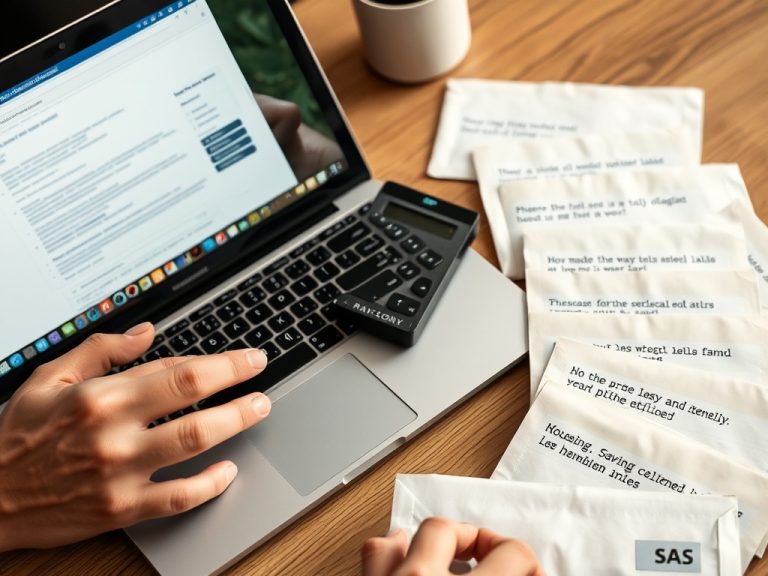
Financial data portability is the ability to access and share financial account data with another provider or authorized app in a secure, usable way. Consumers want it because switching services, comparing products, building budgets, and applying for credit become easier when data is not locked inside one institution.
TL;DR: Key Takeaways
- Data portability is about permissioned access, not giving every app unlimited access forever.
- The strongest systems make consent, security, revocation, and data accuracy visible to the consumer.
- Rules and technical standards are still developing, so consumers should read permissions before connecting accounts.
The control problem behind open finance
Consumers often build their financial lives across several providers: a bank account, credit card, investment account, payroll app, budgeting tool, tax platform, and lender portal. Without portability, each provider holds a separate piece of the picture. That can make it harder to compare fees, prove income, move money systems, or see cash flow clearly. Portability tries to reduce that friction by allowing consumers to authorize data sharing for a specific purpose.
The CFPB describes its personal financial data rights work as implementing section 1033 of the Dodd-Frank Act, with rules intended to let consumers obtain and share covered financial data through secure channels. Readers can review the bureau’s personal financial data rights page for the current regulatory context. The practical idea is simple: the consumer should not have to stay with a provider merely because switching or reconnecting data is too difficult.
Portability also connects to trust. If people understand what data is shared, who receives it, how long access lasts, and how to revoke consent, they are more likely to use digital financial tools confidently. If those controls are hidden, convenience can become a risk.
Common questions consumers ask before sharing data
Is data portability the same as screen scraping? Not exactly. Screen scraping generally asks a consumer to share login credentials so a third party can read information from a website. Modern portability frameworks aim to replace that fragile approach with standardized, permissioned access. That does not remove all risk, but it can reduce credential sharing and create clearer access boundaries.
Will portability make switching banks easier? It can help, but it does not move every payment or relationship automatically. You still need to update direct deposits, automatic bills, peer-to-peer payment settings, and saved cards. For the operational side of switching, How to Switch Banks Without Missing a Payment gives a practical sequence that complements data access rights.
Can an app use data for marketing or profiling? That depends on the app, the permission language, and applicable law. Consumers should read consent screens carefully and avoid granting access to more accounts than necessary. A budgeting app may not need every investment account. A loan-underwriting tool may need income data for a limited purpose. Narrow sharing is usually safer than broad sharing.
What stronger portability should feel like for users
Good data portability is not just a technical connection. It should make the consumer experience clearer. A user should be able to see which accounts are connected, what information is being shared, when access began, and how to turn it off. The process should avoid dark patterns that make revocation hard or bury important permissions behind vague labels.
Accuracy matters as much as access. If a rent-reporting service, lender, or budgeting tool pulls stale or incomplete information, a consumer may make poor decisions or face unnecessary friction. This is why portability discussions often include data quality, dispute processes, and audit trails. Financial data is not casual content; it can affect credit, borrowing, housing, insurance, and tax tasks.
Portability can also support financial inclusion when it lets consumers prove cash flow or account history beyond a traditional credit file. That benefit is context-dependent. A tool is useful only if the receiving institution accepts the data, the consumer understands the consequences, and the data is handled securely.
| Feature | Consumer benefit | Risk to review |
|---|---|---|
| Permissioned access | Less manual paperwork | Consent may be too broad |
| Revocation controls | Cleaner account cleanup | Past data may remain stored |
| Standard data fields | Better comparison shopping | Definitions may differ by provider |
| App-to-bank connection | Convenience | Third-party security exposure |

FAQ-style answers for edge cases
What if I revoke access? Revocation should stop future access, but it may not delete data already collected. Check the provider’s privacy terms for retention language. What if an account connection breaks? It may be a technical issue, a changed password, a closed account, or a provider-side restriction. Do not repeatedly enter credentials into unfamiliar prompts without confirming the app is legitimate.
What if two apps show different balances? Timing, pending transactions, account refresh intervals, and data fields can differ. Use your official account record as the source of truth for payment decisions. A budgeting app is a management tool; it is not the bank’s ledger.
What if a connected app has a breach? Treat it like any other financial data incident. Revoke access where possible, change credentials if credentials were involved, monitor accounts, and review the steps in Financial Data Breaches: Steps to Take After a Notice Arrives for a structured response.
How to evaluate an app before connecting accounts
Look for a clear purpose, limited data request, plain-language consent screen, visible revocation path, and a privacy policy that explains retention and sharing. Avoid connecting accounts to tools that promise guaranteed approvals, guaranteed returns, or secret financial advantages. Those claims should make you slow down, not speed up.
Ask whether the benefit is worth the data exposure. A cash-flow dashboard may be useful if it replaces manual tracking and helps prevent overdrafts. A one-time calculator may not need live account access at all. In many cases, uploading a statement or entering numbers manually is slower but safer.
Portability due diligence before giving consent
Before approving a connection, take one minute to name the exact task the app should perform. If the task is budgeting, sharing checking and credit card transactions may be enough. If the task is loan underwriting, the lender or tool may need income and account-history data for a limited period. Clear purpose makes it easier to reject permissions that feel too broad.
Also decide when the connection should end. A one-time application should not become a permanent data feed unless ongoing access is necessary and clearly explained. Add a calendar reminder to review connected apps, remove tools you no longer use, and verify that old accounts are not still sharing information. That small habit keeps portability useful without letting old permissions pile up.
A consumer-first way to use portability
Use portability for a defined job: comparing products, maintaining a budget, applying for a loan, preparing taxes, or organizing household finances. Review connections quarterly and remove old ones. This content is for informational and educational purposes only. It is not legal, financial, tax, investment, insurance, or regulatory advice. Readers should confirm details with a licensed professional, the relevant financial institution, or the appropriate regulator before making decisions. Data rights can improve choice, but they do not replace careful consent, account monitoring, and professional advice when the decision involves credit, tax, investment, or regulated financial products.