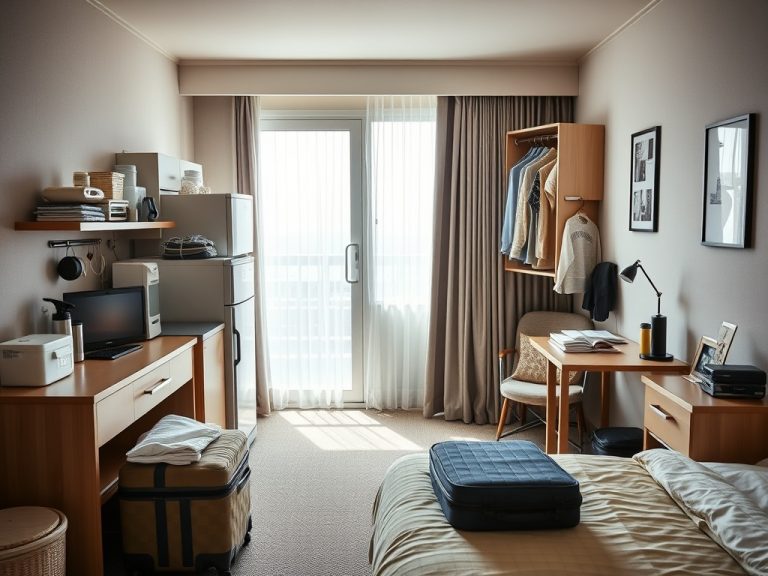
A family suite is worth paying more for when the extra space solves a real sleeping, privacy, storage, or routine problem for the group. The label alone is not enough because suite layouts, occupancy rules, and included features vary widely by property.
Family-Suite Value Check
Before booking, verify the exact sleeping configuration, legal maximum occupancy, number of bathrooms, door separation, kitchen or kitchenette features, and whether the suite is one bookable unit or a combination of connecting rooms. Then compare the total suite price with realistic alternatives, including two standard rooms. The best value often comes from function, not from the word “suite.”
Start With Layout, Not Square Footage
Large square footage can still be awkward if most of it sits in one open room. Families often gain more practical value from a true bedroom door, a second bathroom, a dining surface, blackout capability in multiple zones, or enough circulation space to use a crib or rollaway safely.
Look closely at the official floor plan when available. If the property only provides photos, confirm which images belong to the exact room category. Wide-angle photography can make a room appear larger, while staged furniture may not show how the space feels with luggage, a stroller, or an additional bed in place.
A separate bedroom is especially valuable when adults and children keep different sleep schedules. It can also provide a quiet area for remote work, naps, or feeding without requiring the whole group to follow the same routine.
Compare a Suite With Two Rooms
Two standard rooms can outperform one suite when privacy is the priority, but they introduce their own questions. Unless the reservation specifically confirms connecting rooms, two rooms may be near each other without sharing an internal door. Policies on guaranteeing connecting rooms differ by property and rate channel.
When comparing, include:
- total room cost including mandatory fees;
- number and type of beds;
- number of bathrooms and sinks;
- certainty of connecting or adjacent placement;
- breakfast, lounge, or resort-fee inclusions;
- cancellation terms for one reservation versus two;
- supervision needs based on the ages of travelers.
For trips where room category matters as much as layout, the guide to upgraded room classes explains how floor, view, size, and included benefits can change the value equation.
Occupancy Rules Can Change the Economics
Do not calculate value from bed count alone. A room may physically contain enough beds for a group but still have a lower maximum occupancy because of local code, fire-safety rules, or hotel policy. Extra-person charges, rollaway availability, and crib policies can also change the final price.
Travelers who need accessible features should verify them at reservation time. U.S. ADA regulations include requirements related to hotel reservations for accessible rooms, including making reservation systems able to identify accessible room features with enough detail for people to assess whether a room meets their needs. Exact features still vary, so direct confirmation is prudent.

Features That Can Justify the Premium
A second bathroom can have more practical value than extra lounge space for a larger family, especially during short morning schedules. A kitchenette can reduce the need for restaurant meals, but only if it contains the appliances and utensils the group will actually use. Laundry access can be valuable on longer stays, while a dining table can make takeout and simple breakfasts easier.
Storage is another understated factor. A family suite that provides closets, drawers, luggage benches, and entry space can feel substantially more usable than a larger room with limited storage. The same is true for power outlets, charging points, and lighting that can be controlled separately in sleeping zones.
If the family expects to spend significant time at the resort, a larger suite may also support downtime between activities. On trips where the room is used mainly for sleep, the premium may be harder to justify.
The Cost of Convenience Is Trip-Specific
A family suite can reduce coordination work. One reservation, one entry door, shared belongings, and a single central space can simplify a trip. That convenience has value even when it does not produce a direct cash saving.
At the same time, the lowest total price should be evaluated under current lodging-pricing rules. In the United States, the FTC's short-term lodging fee rule requires advertised total prices to include mandatory fees that can be calculated upfront, while some excluded charges and optional services can be disclosed later under the rule. This makes it easier to compare a suite with other room configurations on a fuller price basis.
Optional resort purchases can still widen the trip budget. If the property sells private pool space or reserved seating, compare those separately using the guide to resort cabanas, daybeds, and private spaces rather than assuming they are part of the suite experience.
When a Family Suite Is Usually Poor Value
A premium is difficult to justify when the suite adds mostly decorative living space, when the sofa bed is unsuitable for the intended sleepers, or when the layout does not create meaningful privacy. It can also be poor value when two confirmed connecting rooms provide more beds and bathrooms for the same or lower total price.
Another weak scenario is a short stay with a packed itinerary. If the group leaves early and returns only to sleep, paying heavily for a living room or kitchenette may deliver little practical benefit. In that case, a standard room with a better location or a more flexible cancellation policy may matter more.
Questions to Ask Before You Confirm
A short call or message to the property can prevent the most expensive family-room surprises. Ask for the exact bed configuration, whether sofa beds are made up before arrival, the availability and fee for cribs or rollaways, and whether connecting doors are guaranteed or only requested. Confirm the bathroom count, refrigerator and cooking equipment, and any age-related lounge or pool rules that affect the group. If the trip depends on a specific setup, ask the hotel to place the details in the reservation notes and keep a copy of the confirmation.
Book the Layout That Reduces Friction
The strongest family-suite choice is the one that makes the daily routine easier. Verify occupancy, bed types, door separation, bathroom count, and kitchen details before paying a premium. Then compare the suite with two-room alternatives using the total price and the needs of the actual travelers. Extra space is valuable when it improves sleep, privacy, storage, and coordination, not simply because it carries a premium room label.