
Contactless payment systems can improve hotel transaction speed and reduce physical card handling, but the business case depends on integration, security, hardware, staff workflow, guest adoption, and total ownership cost. A tap-to-pay terminal alone does not create a complete contactless guest journey.
Contactless ROI in One View
Hotels should evaluate contactless payments across four dimensions: guest convenience, payment security, operational fit, and lifecycle cost. A higher-priced system can be justified when it integrates cleanly with existing point-of-sale and property systems, supports reliable payment methods, reduces manual work, and meets security requirements. It is harder to justify when it adds another disconnected device or creates more exceptions for staff.
What Counts as Contactless Payment
Contactless payment typically uses near-field communication to let a guest tap an eligible card, phone, watch, or other payment device near a reader. In hotels, the technology can appear at the front desk, restaurants, bars, spas, shops, parking points, kiosks, or mobile service stations.
The payment layer should be distinguished from mobile check-in, digital keys, online prepayment, and app-based ordering. Those features can work together, but each has separate technology, privacy, integration, and support requirements.
PCI Security Standards Council maintains standards that apply to payment environments. Its PCI DSS overview describes baseline technical and operational requirements designed to protect payment account data for entities that store, process, or transmit cardholder data or can affect the cardholder-data environment.
The Main Cost Categories
Hardware can include fixed terminals, mobile devices, stands, printers, networking equipment, and accessories. Software costs may include payment-gateway fees, property-management or point-of-sale integration, device management, tokenization, reporting, and vendor support. Implementation can also require testing, staff training, network changes, new workflows, and security review.
Ongoing costs are equally important. Devices need replacement, software needs updates, integrations can break after version changes, and staff need support when transactions fail. Transaction pricing may also differ by processor, card type, region, and commercial agreement.
A sound comparison therefore uses total cost of ownership rather than terminal price. Hotels evaluating broader technology changes may also need to coordinate payment modernization with renovations. The article on hotel renovation upgrades explains why infrastructure, sequencing, and operating disruption should be included in capital planning.
Security Is Part of the Value Case
Contactless technology should not be marketed as “secure” without considering the entire payment environment. Security depends on system design, merchant configuration, software, access controls, network segmentation, device management, vendor practices, and compliance obligations.
PCI SSC's contactless payments on commercial off-the-shelf devices guidance describes security requirements for solutions that allow eligible phones or tablets to accept contactless payments through native NFC capabilities. PCI SSC also points users toward its newer mobile-payment standards as the ecosystem develops.
For a hotel, the practical question is which standards and validation requirements apply to the proposed deployment. That should be confirmed with the acquirer, processor, payment vendor, and qualified security professionals rather than inferred from a marketing brochure.
Operational Benefits That Can Be Measured
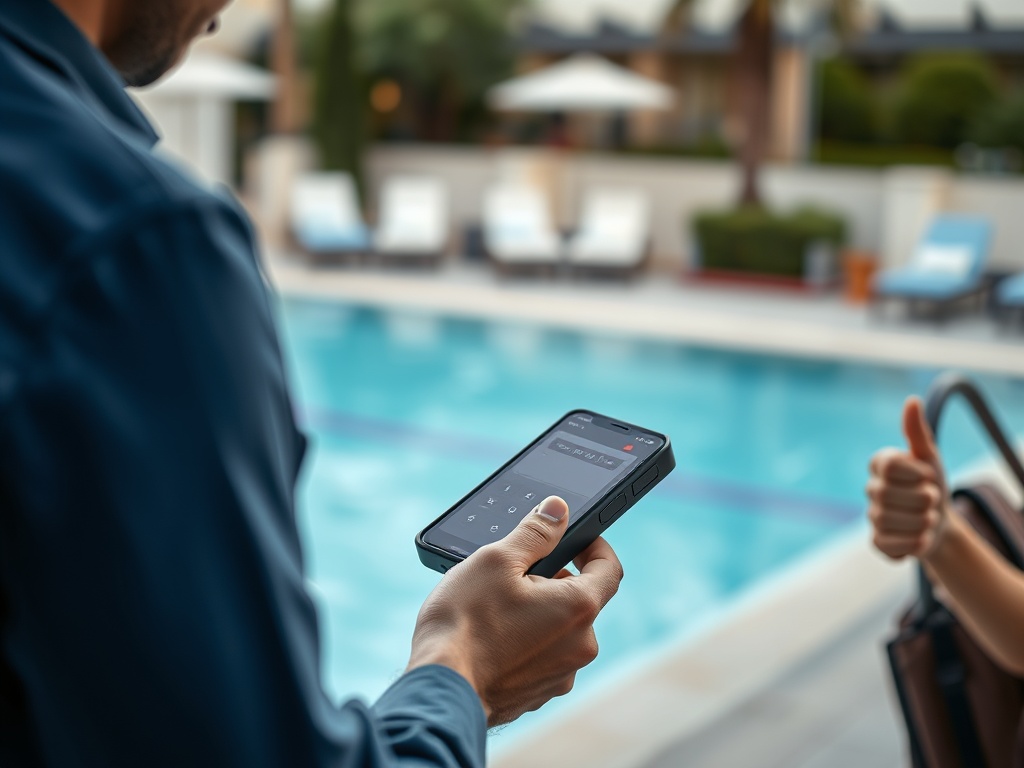
Contactless payment can reduce the need for a guest to hand over a physical card in supported transactions. Mobile acceptance can also let staff take payment in more locations, such as pool areas, event spaces, or tableside service, if the hotel's system and operating model support it.
The measurable benefits might include shorter transaction time, fewer manual steps, reduced queue time, improved payment acceptance flexibility, or faster service recovery. These should be measured before and after implementation using the hotel's own data. Guest satisfaction should not be assumed to improve simply because a contactless option exists.
In some cases, the largest operational value comes from integration. A terminal that automatically passes the correct amount and reservation or folio information between systems can reduce rekeying. A standalone device that requires staff to enter amounts repeatedly may provide contactless acceptance while doing little to improve the wider workflow.
Authorization Holds Still Need Clear Handling
Hotels often deal with estimated final amounts because incidentals or stay extensions can change the bill. Visa's current lodging authorization best practices explain estimated and incremental authorizations for lodging when the final amount is not known at the start of the transaction.
That operational reality does not disappear with tap-to-pay. Guests still need clear explanations of deposits, estimated authorizations, reversals, and final charges. The related guide to room hold deposits and booking guarantees explains why a temporary card hold should be distinguished from an advance charge or reservation deposit.
When the Investment Is Easier to Justify
A stronger business case exists when payment modernization replaces aging equipment, consolidates multiple vendor relationships, supports mobile service, improves integration, or reduces known transaction bottlenecks. It can also make sense when the hotel must update systems for compliance, vendor support, or broader point-of-sale modernization.
The case is weaker when the current environment already meets guest demand, the proposed system has limited integration, or most operational pain comes from processes unrelated to payment. Technology should solve a defined problem rather than exist only because contactless acceptance is fashionable.
For flexible-stay properties, payment design should also account for recurring or extended transactions. The article on flexible-stay hotel options highlights why payment timing, extensions, and longer-stay operations can differ from a simple one-night reservation.
Build the ROI Model Around Actual Workflow
Start with the current process: transaction volume by outlet, average queue patterns, device count, failure rates, chargeback or exception handling, staff time, integration pain points, and replacement needs. Then estimate the costs and expected improvements of the proposed system using conservative assumptions.
Track results after deployment. If the project was intended to reduce front-desk transaction time, measure that. If it was meant to support poolside payments, measure mobile transaction volume and service efficiency. If the main purpose was compliance or end-of-support replacement, recognize that risk reduction may be the primary return rather than direct revenue growth.
Do Not Ignore Guest Choice and Exceptions
A contactless project should still support guests who cannot or do not want to use a particular wallet or tap method. Hotels need documented fallback procedures for unsupported cards, damaged devices, cash where accepted, split payments, offline conditions, and accessibility needs. Exception handling is part of ROI because a system that works quickly for most transactions but creates long delays for edge cases can shift workload rather than reduce it.
Modernize Payments Only Where It Improves the Operation
Contactless acceptance can be a useful part of hotel technology, but ROI comes from reliable integration, secure handling, clear guest communication, and fit with real service workflows. Evaluate the whole payment environment, not just the terminal. The best system is the one that makes transactions easier to operate and support while meeting the hotel's payment-security obligations and guest needs.