
Hotel renovation upgrades create value when they solve a real property problem, improve the guest-facing product, or reduce operating burden in a measurable way. Cosmetic spending alone does not guarantee a better hotel or a stronger return.
Renovation Value in One View
The most important variables are scope, disruption, useful life, operating savings, brand or code requirements, and the extent to which the finished work improves the rooms and spaces guests actually use. A higher renovation budget can be justified when it replaces failing systems, corrects deferred maintenance, improves accessibility, or meaningfully upgrades the competitive position of the property. It is harder to justify when expensive finishes are added without addressing function or maintenance.
Where Renovation Dollars Usually Go
Guestroom projects may include flooring, wall finishes, furniture, lighting, bathrooms, mattresses, casegoods, technology, and doors. Public-area work can extend to reception, corridors, food and beverage spaces, meeting areas, fitness rooms, pools, signage, and exterior arrival zones. Behind the scenes, renovation budgets may also include HVAC, plumbing, electrical systems, life-safety work, roofs, elevators, kitchens, laundry equipment, and building controls.
That mix matters because a visually dramatic lobby may represent only one portion of the total capital need. A project that looks modest to a guest can still be costly if it requires extensive mechanical or infrastructure work.
The U.S. Green Building Council's current guidance on LEED for hospitality projects notes that hotels present distinct sustainability challenges because of features such as laundry, food and beverage operations, pools, frequent renovation cycles, and transient occupancy. That is a reminder that renovation decisions should consider operating systems as well as finishes.
Four Cost Drivers That Matter More Than Finish Level
First is the condition of the existing building. Hidden water damage, outdated wiring, aging pipes, or poor building-envelope performance can expand scope after work starts. Second is phasing. Keeping a hotel open while renovating can preserve revenue, but it may require more complicated sequencing, temporary partitions, repeated mobilization, and careful control of noise and dust.
Third is procurement. Custom furniture, specialty stone, imported fixtures, and long-lead equipment can increase both direct cost and schedule risk. Fourth is compliance. Accessibility, fire and life safety, local codes, and brand standards can turn a simple refresh into a more extensive project.
These factors explain why two properties completing “the same” room renovation can have very different budgets. The correct comparison is not cost per room in isolation, but scope matched to building condition and project objectives.
Value Signals Guests Can Actually Notice
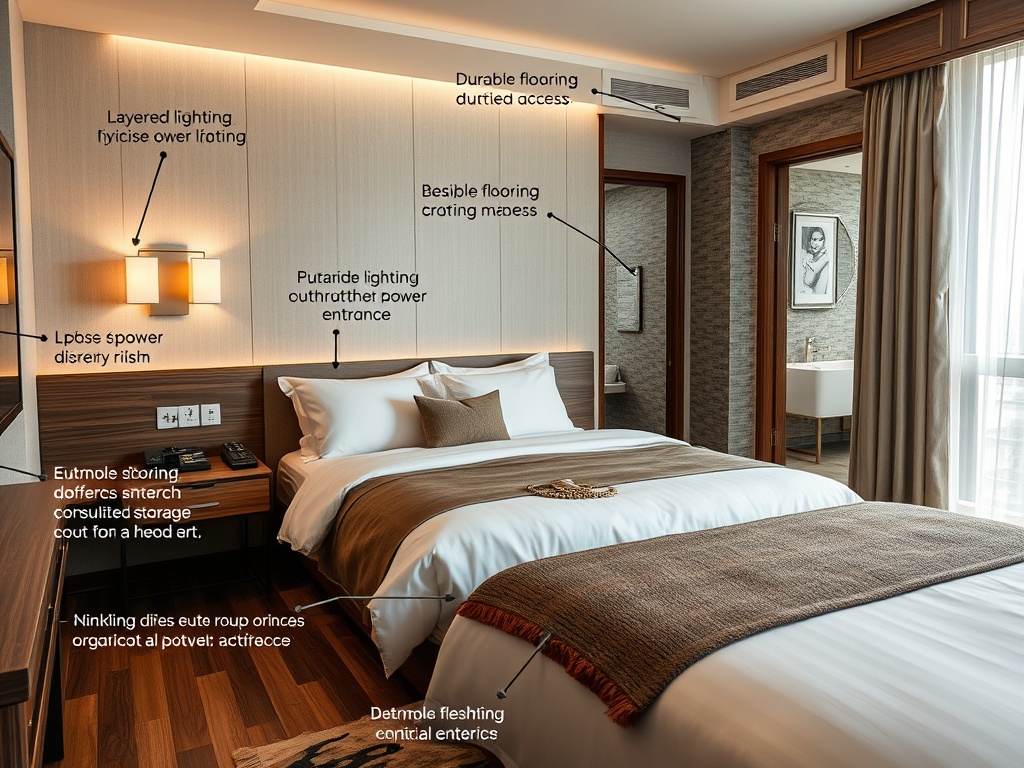
A renovation can add practical guest value when it improves sleep quality, bathroom function, lighting, sound control, climate comfort, charging access, storage, cleanliness, accessibility, or the usability of shared spaces. Those outcomes may matter more than expensive decorative details.
A useful way to assess a renovated property is to compare recent official room photos and amenity descriptions with the room category you are booking. Do not assume every room was renovated at the same time or to the same scope. Hotels often complete projects in phases, so “recently renovated” may describe only part of a building.
For travelers comparing a renovation against a paid room-category upgrade, upgraded room classes provides a separate framework for judging square footage, view, floor, layout, and included benefits.
Operating Savings Can Support the Business Case
Some upgrades have value that is less visible to guests. Efficient plumbing fixtures, laundry equipment, lighting, controls, and mechanical systems can lower utility use or maintenance demands when properly selected and operated. The EPA's WaterSense resources for hotels and lodging facilities identify restrooms, laundry, landscaping, and kitchens as major hotel water-use areas and recommend assessing use before prioritizing improvements.
The Department of Energy also describes integrated efficiency upgrades as a way commercial buildings can reduce energy consumption and operating cost. Its building upgrade guidance supports a whole-building view rather than treating each replacement as an isolated purchase.
These resources do not prove that any specific hotel renovation will pay back. Actual savings depend on local utility prices, baseline performance, occupancy, equipment selection, maintenance, and operating practices. A credible investment case should therefore use property-specific assumptions and post-project measurement.
When a Higher Renovation Budget Is Justified
Higher spending can be rational when it extends useful life, avoids repeated repairs, reduces disruption from future work, or corrects an issue that materially affects guest experience. Durable flooring in a high-traffic corridor may be more economical over time than a cheaper material that requires frequent replacement. The same logic can apply to waterproofing, windows, bathroom assemblies, and commercial-grade furniture.
A premium can also be justified for design work that improves space efficiency. Reconfiguring a lobby to reduce queues, adding useful seating and power access, or improving room storage may create more functional value than simply choosing more expensive finishes.
By contrast, value is weak when scope is driven mainly by visual novelty, when materials are difficult to maintain, or when the design conflicts with how the property is actually used. A renovation should be evaluated as an operating asset, not only as a styling exercise.
Guest-Facing Pricing After a Renovation
Hotels may charge more after a renovation, but the renovation itself does not establish that a higher rate is good value. Compare the renovated property's total price with realistic alternatives, then identify what changed. A newer bathroom, better sound insulation, improved bedding, or a more useful layout may justify a premium for some trips. A decorative refresh with no meaningful functional improvement may not.
If a hotel bundles renovated rooms with lounge privileges or transfer services, separate those add-ons from the core room comparison. The guide to club access and transfer add-ons helps value those components independently.
A Useful Renovation Comparison Checklist
Before assigning a premium to a renovated property, identify the exact completion date and scope for the room category you plan to book. Compare bathroom condition, climate control, sound insulation, mattress and bedding, lighting, power access, and the usability of furniture. For owners, the equivalent checklist is broader: confirm remaining useful life, warranty coverage, maintenance requirements, spare-part availability, and whether the new systems can be serviced without specialized labor. These checks turn a vague renovation story into observable features and operating assumptions.
Judge the Upgrade by Outcomes, Not the Renovation Label
For owners, the strongest renovation plans connect capital spending to compliance, reliability, guest use, operating performance, and competitive needs. For travelers, the best test is simpler: confirm what was renovated in the exact room or area you will use and compare the resulting experience with the total price. “Renovated” is a description, not proof of value.