When travel limits equipment and energy, keep exercise simple: walk when practical, use short bodyweight strength sessions, and reduce intensity to match sleep, schedule, heat, and travel fatigue. The purpose is to preserve movement and routine, not to recreate your full home program in a hotel room.
Travel training minimum
Aim for a daily movement anchor plus two or three brief strength sessions per week. Ten useful minutes count, especially when the alternative is doing nothing because the ideal workout is unavailable.
Choose the purpose of travel exercise
Travel workouts can maintain habit, reduce stiffness, support mood, or preserve some fitness. These are different goals from maximizing strength or endurance. Decide which matters on the trip. A maintenance goal allows much lower volume than a building phase and reduces the pressure to train through poor sleep or a packed itinerary.
The CDC getting-started guidance includes practical ideas for travel, such as walking in airports, moving at rest stops, using mobile activity resources, and taking stairs when appropriate. These small choices are not a substitute for every workout, but they help prevent the all-or-nothing pattern.
Use a three-level plan
| Energy and time | Plan | Example | Success measure |
|---|---|---|---|
| Low | Movement only | 10–20 minute walk plus gentle mobility | You feel better, not more depleted |
| Moderate | Short full-body session | 2–3 rounds of squat, push, hinge, row substitute, trunk work | Good form and energy left |
| High | Planned training | Hotel gym strength or steady run/ride | Fits the trip without harming recovery |
Decide the level after considering sleep, illness symptoms, heat, altitude, and the day’s schedule. A low-energy plan is not failure; it is the correct dose for the available capacity.
A no-equipment full-body template
Choose five movements: a squat or sit-to-stand, a hip hinge or glute bridge, a push-up variation, a pulling substitute such as an isometric towel row only when the setup is safe, and a trunk exercise such as a side plank or dead bug. Complete two or three controlled rounds, stopping well before form deteriorates.
- Use a bed or desk only if it is stable and designed to tolerate the load.
- Choose incline push-ups against a wall or solid surface when floor push-ups are too demanding.
- Use split squats or step-ups only when balance and the surface are secure.
- Pack a light resistance band if you already know how to anchor and use it safely.
- Avoid improvised heavy lifting with unstable luggage or furniture.
Let walking carry more of the week
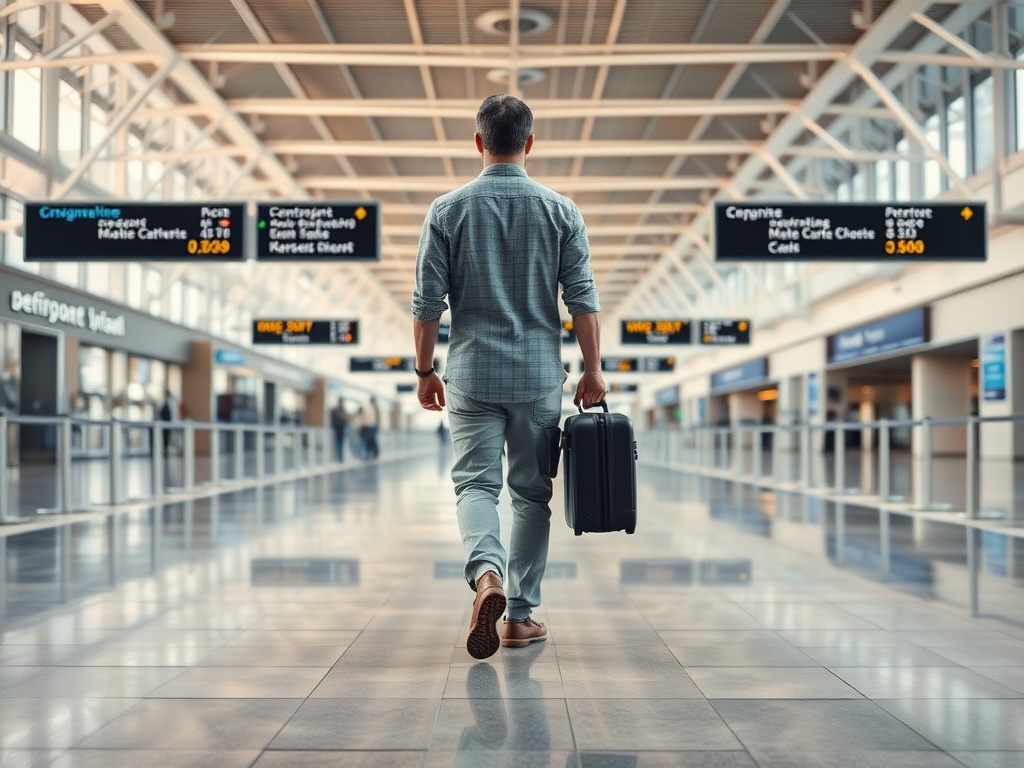
Walking is often the most available travel exercise. Use airport terminals, sightseeing, short post-meal walks, or a safe route near accommodation. Comfortable footwear and route safety matter more than hitting a step number. In hot climates, shift activity earlier, choose indoor options, and carry fluids.
If long walking days leave you unusually depleted, compare the pattern with normal fatigue versus overtraining before adding running intervals or steep treadmill work. Travel fatigue is usually temporary, but persistent performance decline deserves a more cautious response.
Manage jet lag, sleep loss, and time zones
Long travel days can reduce coordination and increase perceived effort. After a poor night, select easy movement, technique work, or a short strength session rather than a maximal lift or hard interval workout. Outdoor daylight and a consistent local wake time may help the travel schedule, but exercise should not become another source of late-night stimulation.
Hotel-gym decisions
Inspect equipment before using it. Start lighter than usual because machine designs, bench heights, flooring, and dumbbell increments differ. Build a simple session around a squat or leg press, hinge, push, pull, and carry. Avoid testing unfamiliar machines to failure when no spotter or staff support is available.
When the gym offers both weights and cardio equipment, keep the combined session brief and goal-directed. Choose one priority, make the second component easy, and stop before unfamiliar equipment or travel fatigue begins to affect technique.
A 12-minute room session
1. Two minutes of easy marching, shoulder circles, and controlled sit-to-stands.
2. Three minutes alternating squats and incline push-ups at an easy pace.
3. Three minutes alternating glute bridges and a side-plank variation.
4. Two minutes of reverse lunges or supported split squats, if balance is secure.
5. Two minutes of relaxed breathing and mobility for areas that feel stiff.
The session should be quiet, safe for the flooring, and considerate of people in adjacent rooms. Replace jumping with controlled movements unless the property has a designated exercise area.
Food and hydration on the road
Travel can make meals irregular. Use simple anchors: include a protein source, fruit or vegetables when available, carbohydrate appropriate to activity, and regular fluids. Pack familiar snacks for delays. Do not try to compensate for restaurant meals by skipping food before a workout or adding punishing exercise.
For evening choices, foods that support sleep and recovery offers flexible meal ideas without requiring specialized products.
When to skip the workout
Skip structured exercise and seek appropriate care for fever, chest symptoms, severe gastrointestinal illness, fainting, acute injury, or concerning shortness of breath. Also reconsider outdoor exercise during unsafe heat, air-quality alerts, storms, unfamiliar traffic conditions, or security concerns.
Return home without a rebound week
Resume normal training based on how much you actually did and how well you slept. After a mostly inactive trip, use one or two lower-volume sessions. After an active trip with extensive walking, treat the travel itself as load and avoid immediately adding hard leg training.
The broader fitness restart framework is useful after long trips, illness, or any break that meaningfully reduced training.
Pack a movement kit that earns its space
A compact kit can include a light resistance band, a small massage ball, comfortable walking shoes, and workout clothing that dries quickly. Pack only tools you already use. Travel is a poor time to learn complicated suspension systems or experiment with aggressive mobility devices.
Store a short routine offline in case connectivity is limited, and note any hotel-gym hours before the day becomes crowded. A reusable water bottle can support hydration where filling is safe and permitted.
The kit should reduce decisions, not create an obligation to train. If the trip becomes physically demanding through walking, carrying luggage, or long workdays, use the equipment for gentle mobility or leave it packed.
For longer trips, plan one optional progression rather than several. You might add a third round to the room circuit or extend one walk, but only after sleep and energy stabilize. Maintenance requires less novelty than most travel workout lists suggest. A familiar short plan also reduces the chance of soreness interfering with work, sightseeing, or the return journey.
Keep the chain light, not perfect
Select one daily movement anchor and two short strength windows before departure. The trip is successful when movement supports energy and routine without competing with safety, sleep, work, or the reason you traveled.