Some repair shops will install customer-supplied parts, but many limit or decline the practice because it changes quality control, warranty responsibility, scheduling, and liability. The point is not to make the job sound more complicated; it is to make the decision traceable before money changes hands.
TL;DR: Key Takeaways
- Best fit for readers: Beginner drivers comparing repair advice in the cost, insurance, warranty & payment category.
- Ask what was inspected, what was measured, and what would happen if the work is delayed.
- Treat service recommendations as best-practice guidance unless the shop can connect them to a manufacturer limit, safety defect, code, or failed test.
The Short Answer Shops Usually Give
Many shops will not install customer-supplied parts, and those that do may limit the labor warranty. The reason is not always markup. The shop has to stand behind fitment, quality, sourcing, delivery timing, and the final result. When the part comes from the shop's supplier, the repair business usually has a clearer path for returns, defects, and warranty handling. When the customer brings a part, that chain becomes messy.
Why Customer-Supplied Parts Complicate the Job
A part can look right online and still be wrong for the exact trim, production date, engine, brake package, calibration, or market version of the vehicle. If the part fails, the customer may blame the shop, the seller may blame installation, and the shop may be stuck proving it followed procedure. That is why a service advisor may steer the conversation toward parts the shop can verify. The same pre-approval clarity discussed in {L['advisor']} is especially important here.
| Question | Practical answer |
|---|---|
| Can a shop refuse my part? | Usually yes. A private repair business can set parts policies, subject to local law and any specific contract. |
| Will my warranty automatically be void? | Not simply because a non-dealer performs routine maintenance, but documentation and proper parts still matter. |
| Who covers failure? | That depends on shop policy. Many shops will not warranty labor tied to a customer-supplied part. |
| When should I ask? | Before scheduling, before teardown, and before buying the part. |
Warranty, Fitment, and Liability Questions
Warranty is the biggest misunderstanding. The FTC explains that warranties and service contracts have specific terms, and drivers should understand what is covered, excluded, and required for claims: FTC auto warranties and service contracts. Separately, FTC material has long noted that a dealer cannot deny warranty coverage merely because routine maintenance or repairs were performed somewhere else, but that does not mean any part from any source is automatically protected. Documentation, correct specifications, and proof of proper service can still matter.

When Bringing Your Own Part May Be Reasonable
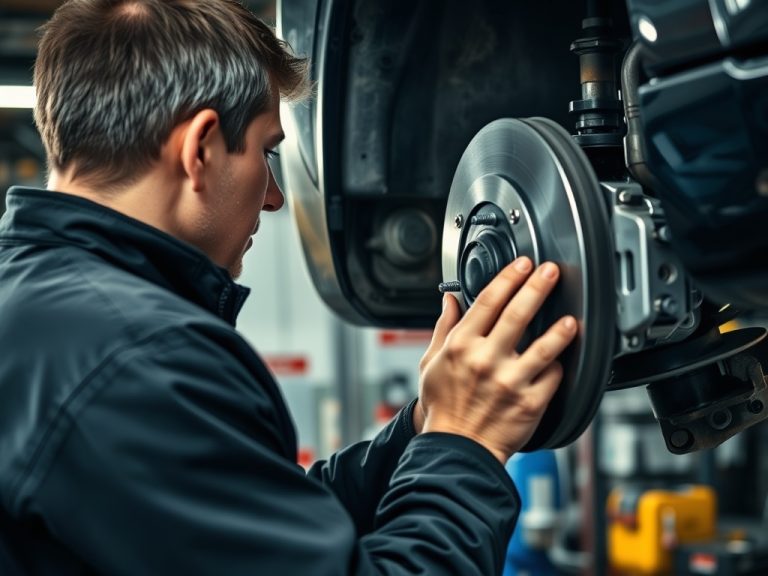
Bringing your own part may be reasonable when the vehicle is older, the part is rare, the shop specifically approves the source, or the repair is cosmetic and low risk. It is less reasonable for safety systems, emissions-related parts, electronics requiring programming, high-voltage EV components, or parts that require significant teardown to reach. If a customer-supplied rotor, sensor, module, or pump is defective, the vehicle may occupy a bay while everyone waits for a solution. That downtime has a real cost.
How to Ask Without Creating Friction
Ask politely and early: 'Do you install customer-supplied parts, and if so, what warranty applies to labor?' Then ask whether the shop needs the VIN, part number, brand, receipt, or packaging. If the shop says no, treat that as a policy decision rather than an insult. You can still compare estimates, but do not force a shop into a repair it cannot support. For brake-specific decisions, pair this conversation with {L['rotor']} so the part choice matches the measurement-based recommendation.
A Parts Policy Is Part of the Repair Decision
A customer-supplied parts request works best when the driver turns a vague concern into a specific service question. Instead of asking for the cheapest option, ask what was observed, what was measured, and what risk changes if the work waits. That framing keeps the conversation practical. It also makes room for normal professional judgment without letting opinion replace evidence. A shop may prefer a certain method or parts line, but the driver should still understand why that choice fits the vehicle, the symptom, and the expected result.
Red flags are not always dramatic. A missing measurement, a recommendation that changes when you ask one question, a refusal to explain parts quality, or an estimate that hides labor and supplies can all signal that the decision needs more clarity. The right response is not automatically to reject the shop. It is to slow the process down, ask for the missing detail, and decide whether the answer feels consistent with the vehicle condition and the written estimate.
After the work or inspection, keep a simple record. Save the estimate, the invoice, photos, test results, and any notes about what improved. Then monitor the original symptom under the same conditions. If the problem returns, those details help the next conversation start from evidence rather than memory. This is especially useful when more than one system could be involved or when several maintenance items were performed close together.
How to Compare Savings Against Risk
The apparent savings from bringing a part can shrink when the part is wrong, delayed, damaged, missing hardware, or not covered by the shop's labor warranty. If the vehicle is apart while a replacement is shipped, storage, towing, or lost time may cost more than the part discount. That is why the lowest online price should not be compared only with the shop's parts price. It should be compared with the whole repair outcome.
A fair shop policy should be stated early. Some shops install customer parts only for certain low-risk jobs. Some add labor disclaimers. Some refuse entirely. The driver can then choose another shop, buy the shop-sourced part, or postpone the work until the right expectations are in writing.
How to Prevent Parts-Policy Surprises
One more useful habit is to separate immediate safety decisions from longer-term ownership decisions. Immediate decisions answer whether the vehicle should be driven today, repaired before the next trip, or parked until inspected. Longer-term decisions answer whether the repair fits the vehicle's age, value, usage, and future plans. This separation prevents one estimate from feeling like an all-or-nothing judgment. A driver may approve a safety repair now, monitor a comfort issue, and schedule preventive work later when timing and budget make more sense.
When comparing shops, do not compare the final total alone. Compare the explanation, inspection depth, part quality, warranty language, diagnostic method, and willingness to document findings. Two estimates can look different because one includes hardware, testing, programming, fluid, cleanup, or verification that the other omitted. A cheaper estimate is helpful only if it solves the same problem to the same standard. A more expensive estimate is reasonable only when the added value is clear enough for the driver to understand.
Finally, keep the language precise when you talk with the shop. Say what you felt, heard, smelled, saw, or measured, and avoid naming a part unless it has already been tested. Clear symptom language helps the advisor write a better repair order and helps the technician reproduce the concern. It also protects you from approving a repair based on a guess you accidentally introduced into the conversation.
Practical Wrap-Up for Can You Use Your Own Parts at a Repair
Ask the shop about its parts policy before booking, and get any warranty limitation in writing so expectations stay clear.