If your goal is to improve soil over time, organic mulches such as arborist wood chips, shredded leaves, finished compost, clean straw, and thin layers of untreated grass clippings generally offer more soil-building value than stone or plastic because they decompose and contribute organic matter. The best choice depends on the planting, desired lifespan, weed pressure, local disease concerns, and how often you are willing to replenish it.
TL;DR
• Wood chips are a strong long-lasting choice for trees, shrubs, and perennial beds.
• Shredded leaves and compost break down faster and are useful where soil improvement is a higher priority than long-lasting surface coverage.
• Keep mulch at an appropriate depth and away from trunks and stems; deeper is not automatically better.
What “Feeding the Soil” Means in a Mulch Context
Mulch is applied on top of the soil. Organic materials gradually decompose at the soil surface, where organisms incorporate part of that material into the upper soil. The effect is slower and more distributed than mixing a fertilizer into the root zone. Think of mulch as a protective surface layer that can also contribute organic matter over time.
University of Minnesota Extension describes organic mulches as materials that improve soil physical and biological properties as they break down. It also emphasizes their roles in moisture regulation, weed suppression, temperature moderation, and erosion protection. Those benefits often matter as much as the nutrients contained in the mulch itself.
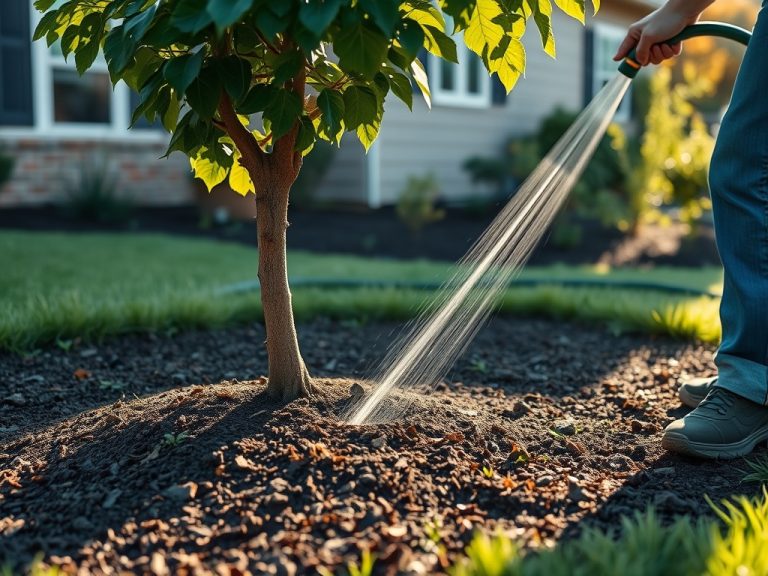
Watering Newly Planted Trees: A Week-by-Week Guide shows how an appropriate mulch ring can complement establishment watering without piling material against the trunk.
| Mulch | Best use | Breakdown pattern | Soil-building role |
|---|---|---|---|
| Arborist wood chips | Trees, shrubs, mixed beds | Gradual | Adds organic matter as surface material decomposes |
| Shredded leaves | Perennial and vegetable beds | Moderate to fast | Returns leaf-derived organic matter and supports soil cover |
| Compost | Beds needing a thin biologically active layer | Fast | Directly adds stable organic material but may need more frequent renewal |
| Pine bark | Ornamental beds and containers where appropriate | Moderate | Adds organic matter gradually; texture affects longevity |
Arborist Wood Chips: Best Long-Term All-Rounder for Woody Beds
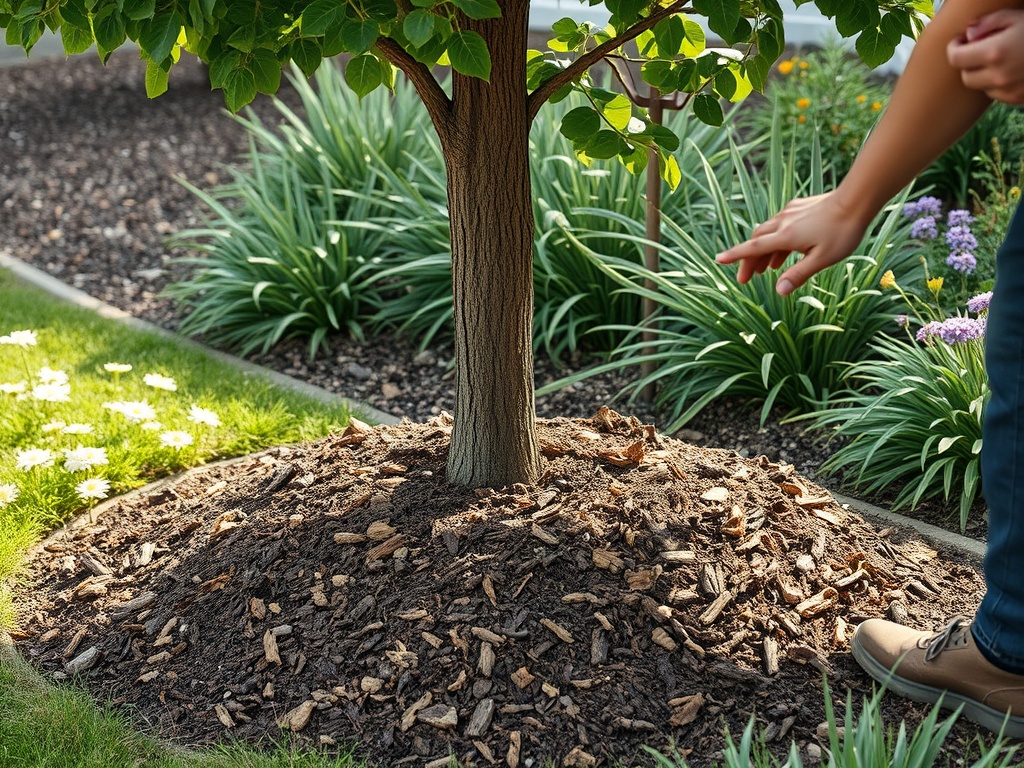
Wood chips are well suited to trees, shrubs, paths between perennial plantings, and mixed landscape beds because they persist longer than leaves or compost. As the chips weather, fungi and other decomposers break them down and organic matter accumulates at the soil surface. A coarse texture also leaves useful air spaces and resists forming a dense crust.
Apply chips as a surface mulch rather than digging fresh woody material deeply into garden soil. Keep the root flare and trunk base visible and free of piled mulch. Replenish only after checking the existing depth; a thin aged layer does not need another full application simply because the calendar says it is time.
Wood chips vary by source. Avoid material contaminated with trash, treated lumber, invasive-plant seed, or other unwanted debris. When using local arborist chips, understand what tree material is included and whether any regional pest or disease restrictions affect movement.
Shredded Leaves: Fast, Local, and Excellent for Garden Beds
Autumn leaves are a valuable on-site resource. Shredding helps them settle into an even layer and reduces the tendency of large intact leaves to mat or blow away. They decompose faster than coarse wood chips and can be especially useful around perennials, in vegetable-garden paths, and on beds that are renewed frequently.
Avoid thick wet mats that block air and water. Chop or shred leaves where practical and apply a moderate layer. Diseased plant material may require different handling depending on the pathogen and local guidance, so do not automatically return every leaf to a susceptible planting.
Leaves are also seasonal. If you want a uniform year-round surface, combine them with a coarser mulch strategy rather than expecting a light leaf layer to last through repeated wind, rain, and cultivation.
Finished Compost: Fastest Soil Contribution but Shortest-Lived Cover
Finished compost can add organic matter and nutrients more quickly than coarse mulch because much of the decomposition has already occurred. It is useful as a surface top-dressing around established plants or as part of soil preparation when local recommendations call for it. As a weed-suppressing mulch, however, a thin compost layer often does not last as long as wood chips or straw.
Use mature compost from a known source. Immature material can continue decomposing aggressively, while contaminated compost can introduce persistent herbicide residues or unwanted materials. Compost quality matters more when it is applied near food crops.
For beds where both nutrition and weed suppression matter, a thin compost top-dressing beneath an appropriate organic mulch can separate the two jobs: compost for soil amendment and a coarser surface layer for longer-lasting cover.
How to Grow Salad Greens Year-Round offers an edible-garden context where clean compost and organic residues can be managed as part of a repeat planting cycle rather than left as a thick mulch over tiny seedlings.
Straw and Grass Clippings: Useful but More Management-Intensive
Clean straw is a practical vegetable-garden mulch because it keeps soil covered, reduces splash, and can help keep produce clean. Choose straw rather than seed-filled hay when weed introduction is a concern, and verify that the source has not been treated in a way that could affect your garden.
Grass clippings can also be useful when applied in thin, dry layers. Thick fresh piles can mat, smell, and restrict airflow. Do not use clippings from a lawn recently treated with herbicides or other products unless the label clearly permits the intended reuse. When in doubt, follow the pesticide label and local extension advice.
These materials decompose quickly, which is useful for soil organic matter but means they need more frequent renewal. That makes them better suited to actively managed food gardens than to low-maintenance shrub beds.
Stone and Landscape Fabric Do Not Feed Soil the Same Way
Stone, gravel, and synthetic fabrics can provide surface coverage, but they do not add organic matter as they age. In hot sun, stone can also raise temperatures around some plants. EPA WaterSense notes that rock mulches may increase heat and water loss in sunny areas and recommends matching mulch type to plant needs.
Landscape fabric can suppress weeds initially, but organic debris often accumulates above it and eventually supports new weeds. Roots can grow into or through some fabrics, making later renovation difficult. Use these materials for specific design or erosion-control purposes rather than assuming they are a universal low-maintenance substitute for organic mulch.
Apply Mulch So It Helps Instead of Suffocating Roots
University of Minnesota Extension recommends moderate mulch depths and warns against piling material against plant stems or tree trunks. Excessively deep mulch can restrict water or oxygen movement, keep poorly drained soil too wet, and encourage roots to grow in the mulch layer rather than the mineral soil.
Weed first, water if the soil is dry, and spread mulch evenly. Keep a clear ring around trunks and woody stems. On slopes, choose a texture that stays in place without forming an impermeable mat. After storms, check for material that has washed against the house, covered drains, or accumulated at plant crowns.
Before topping up, pull back a small area and measure what remains. Organic mulch should be renewed based on decomposition and function, not automatically stacked on top every season.
Match the Material to How Often You Want to Revisit the Bed
For trees and shrubs, coarse wood chips are often the most practical soil-building choice because they last while still decomposing gradually. For vegetable beds, straw, leaves, and compost are easier to work around annual planting. For perennial beds, shredded leaves or chips can be combined depending on the desired appearance and renewal schedule.
The best mulch is not a single product for the entire property. Use different materials where their decomposition rate, texture, and maintenance fit the planting. Over time, consistent surface cover and appropriate replenishment can do more for soil function than repeatedly switching products based on appearance alone.
Practical next step: Choose one mulch based on the planting and renewal interval, then measure the existing layer before adding more; correct depth and placement matter more than a fresh-looking pile.
Informational and educational only. Mulch suitability, pest and disease restrictions, wildfire guidance, pesticide-label requirements, and compost standards vary by location and material source.[/