Newly planted trees need frequent, deliberate watering because most absorbing roots remain close to the original root ball during early establishment. A useful starting schedule is daily watering for the first one to two weeks, every two to three days through roughly week 12, then weekly watering while roots continue to establish, with adjustments for rainfall, soil, tree size, drainage, and local conditions.
TL;DR
• Water the root ball immediately after planting and monitor the surrounding root zone, not just the trunk.
• Use the week-by-week schedule as a starting framework, then adjust for substantial rainfall, heat, soil texture, drainage, and tree condition.
• Apply water slowly enough to wet the active root zone without leaving the soil chronically saturated.
Planting Day: Settle the Root Zone Thoroughly
Water immediately after planting. This settles soil around the root ball and reduces pockets of dry soil around disturbed roots. Direct water over the root ball and the immediate backfill area rather than sending a narrow stream against the trunk. If water runs away quickly, build a shallow temporary berm at the outer edge of the planting area where appropriate.
University of Minnesota Extension recommends applying water based on trunk diameter and emphasizes direct root-zone watering. Penn State Extension likewise notes that the newly planted root system remains concentrated near the planting hole for weeks. The exact volume must be adjusted for tree size, soil, weather, and drainage rather than treated as a universal dose.
Before mulching, confirm that the root flare is visible and the tree is planted at the correct depth. Water cannot compensate for a tree planted too deep or in a chronically saturated site.
Weeks 1-2: Check Daily and Water Frequently
During the first one to two weeks, extension guidance commonly calls for daily watering unless substantial rainfall has already wet the root zone. This is the period when the disturbed root system has the least reach into surrounding soil. Hot, windy weather can increase demand, while cool wet weather can reduce it.
Use a soil probe, trowel, or your fingers to check moisture below the surface. The top inch can dry while the root ball remains wet, or the surface can look damp while the interior root ball is dry. The aim is moist soil through the root zone, not constant saturation.
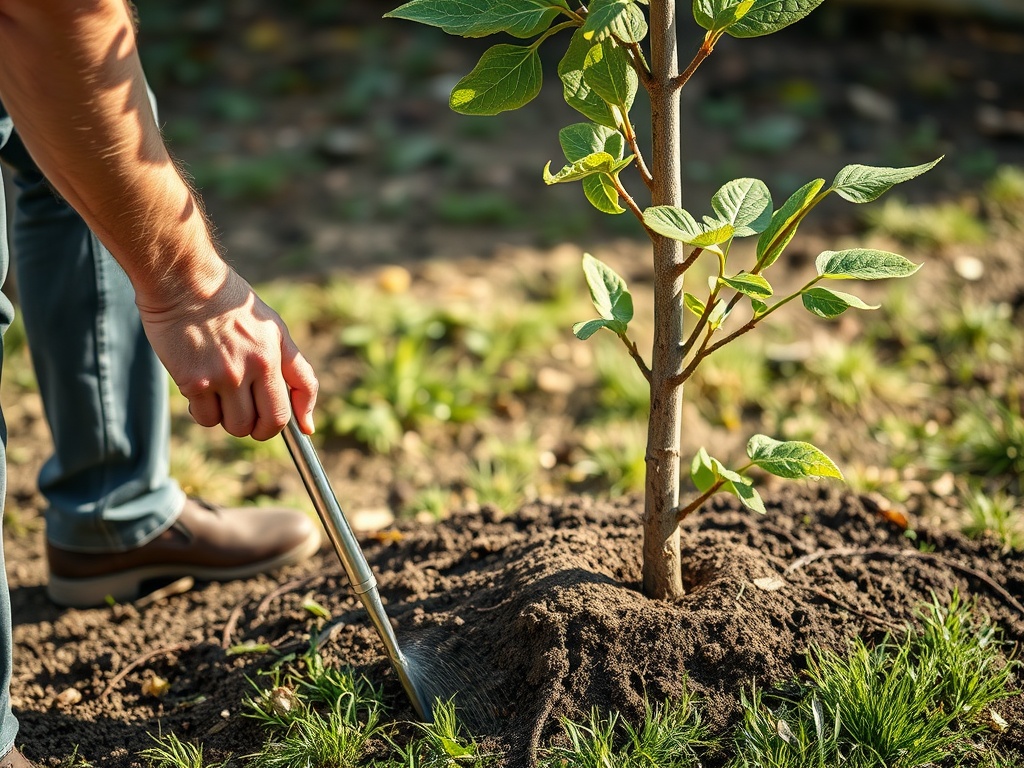
Slow watering is usually more effective than a fast splash. A bucket with small holes, watering bag, soaker hose, or low-flow hose can work, provided the water reaches the entire root ball and the device is maintained according to instructions.
Weeks 3-6: Move Toward Every Two to Three Days
As new roots begin extending into surrounding soil, the interval can usually lengthen. University of Minnesota and Penn State guidance both use an every-two-to-three-day pattern during the early establishment period. Continue checking soil because sandy sites, exposed locations, and heat can dry faster than heavy or shaded soils.
Do not interpret a longer interval as permission to water shallowly. Each irrigation should wet the active root zone. If water ponds for a long time, the soil may be poorly drained and the schedule may need adjustment. Chronic saturation can deprive roots of oxygen and contribute to decline.
Keep lawn sprinklers separate from tree establishment when possible. A lawn may receive frequent shallow irrigation that wets the surface but fails to supply the deeper root ball evenly.
Weeks 7-12: Keep the Pattern Consistent While Roots Expand
Through approximately week 12, continue the two-to-three-day framework unless rainfall and soil moisture indicate that water is not needed. The tree may look established above ground while roots are still concentrated near the planting site. Continue monitoring rather than stopping because new leaves appear healthy.
Expand the watered area gradually as roots grow outward. Do not focus every gallon at the trunk. For a balled-and-burlapped or container tree, the original root ball can dry differently from the surrounding soil, so checking both zones is helpful.
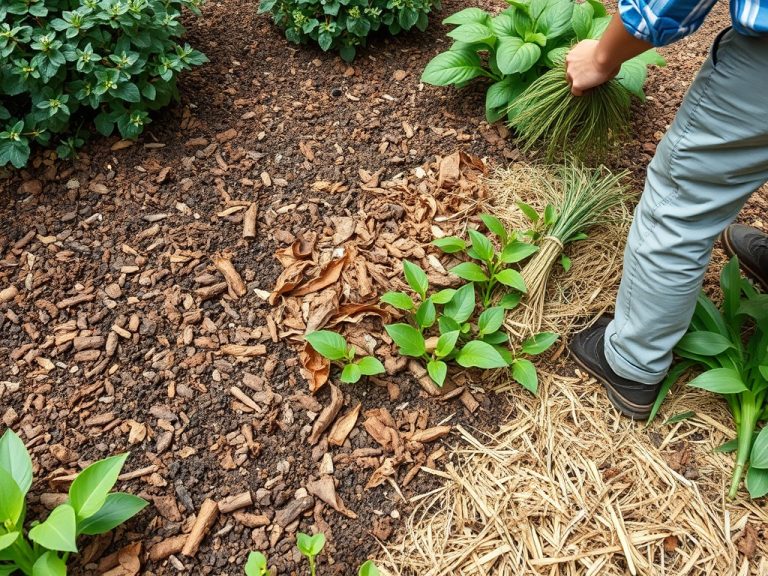
If you use mulch, maintain a moderate layer over the root area but keep it away from the trunk and root flare.
The Best Mulches for Feeding the Soil Over Time explains how mulch choice and placement can support soil conditions around landscape plants without burying the root flare.
After Week 12: Shift Toward Weekly Watering
After the initial three months, many extension schedules move toward weekly watering until roots are established, again adjusted for rainfall and soil moisture. Establishment can take more than one growing season, especially for larger trees. A newly planted tree should not be treated like a mature landscape tree after its first summer.
Continue to water during dry periods until the ground freezes in cold climates, following local recommendations. In regions with mild winters, establishment needs may continue on a different seasonal pattern. Local extension guidance should override a generic calendar where climate differs.
Penn State Extension notes that establishment time increases with trunk diameter. That is a useful reminder that a larger transplant often needs a longer period of attentive aftercare than a small tree.
If the plant you are managing is a container tree indoors rather than a landscape transplant, Best Indoor Trees for Small Homes covers pot size, light, and indoor care instead of outdoor establishment irrigation.
Adjust the Schedule for Rainfall and Soil Rather Than the Calendar Alone
A soaking rainfall may replace a scheduled irrigation, while a brief downpour can produce runoff without deeply wetting the root zone. Check the soil several inches down before deciding. Sandy soil drains quickly and may require closer monitoring; heavy clay holds water longer and is more vulnerable to saturation.
On slopes, apply water slowly so it infiltrates rather than running downhill. In compacted urban soils, poor infiltration may require professional assessment or a different watering method. Do not excavate aggressively around new roots in an attempt to “improve” drainage after planting.
Newly planted trees should remain in an establishment category even if the mature species is drought tolerant.
Watch the Tree and the Soil for Opposite Stress Signals
Wilting, scorched edges, premature leaf drop, or a dry root ball can suggest water stress, but these symptoms are not unique to underwatering. Overwatered roots, planting-depth problems, root damage, heat, disease, or transplant shock can create similar symptoms. Diagnose the soil condition before adding more water automatically.
If the root zone remains soggy, smells anaerobic, or the planting hole holds standing water, stop following a fixed schedule and investigate drainage. If the soil is dry several inches down shortly after watering, check whether water is running off, bypassing a dry root ball, or leaking from the watering device.
A certified arborist or local extension professional can help when decline continues despite reasonable watering.
Keep the Routine Until the Tree Can Rely on Its New Roots
The week-by-week schedule is a framework for attention: very frequent care at first, gradually longer intervals as roots spread, and continued weekly monitoring during establishment. Soil moisture and weather should always refine the calendar.
Pair watering with correct mulch placement, protection from mower damage, and periodic checks of stakes or ties if they were needed. The goal is not to keep a tree on permanent irrigation; it is to support root expansion until the surrounding soil can meet more of the tree's needs.
Practical next step: Put the first 12 weeks of watering on your calendar, but pair every scheduled watering with a soil-moisture check so the tree receives enough water without staying saturated.
Informational and educational only. Tree species, size, soil, rainfall, drainage, planting method, irrigation rules, and climate can change watering needs; consult local extension or a qualified arborist for site-specific advice.[/