The best indoor tree for a small home is one whose mature indoor size, light needs, canopy shape, and care routine match the room you actually have. Compact palms, rubber plants, dracaenas, and carefully managed ficus types can create vertical greenery without taking over the floor, but each makes different demands on light, watering, and humidity.
TL;DR
• Choose by mature indoor footprint and light conditions before choosing by appearance.
• Narrow or upright plants generally fit small rooms better than broad canopies, but pruning tolerance and pot stability also matter.
• Healthy indoor trees need drainage, consistent light, and a watering routine based on soil moisture rather than a fixed calendar.
Measure the Tree Zone as a Three-Dimensional Space
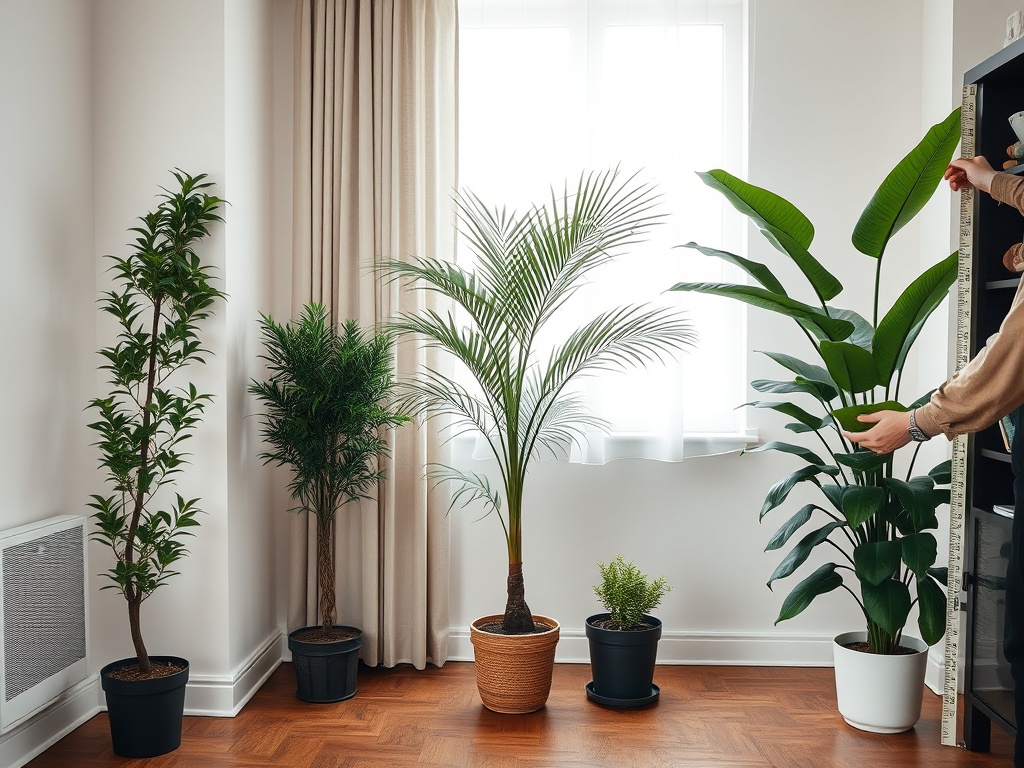
Most people measure only the empty floor corner. An indoor tree also needs room for its crown, leaves, pot, and access for watering and cleaning. Measure floor width, ceiling height, window distance, and the path used to move around the room. Consider whether a door, curtain, ceiling fan, heating vent, or frequently opened window will interfere with foliage.
Leave enough space to rotate or move the pot for cleaning without scraping walls. In a tight apartment, a plant with an upright habit can provide more visual height per square foot than a broad spreading specimen. A stable planter matters too; tall foliage in a very light pot can become top-heavy.
How to Grow Salad Greens Year-Round offers a contrasting indoor-growing setup built around shallow trays and shelves, which can be useful when floor area is too limited for a tree.
Parlor and Kentia Palms: Soft Shape With Modest Floor Demand
Parlor palm is a classic small-space option because it generally remains compact indoors and tolerates lower light better than many tropical-looking plants. Penn State Extension describes parlor palm as an indirect-light houseplant that commonly stays around two to three feet indoors, while kentia palm is slow-growing and can tolerate lower-light conditions as well.
Palms prefer well-drained potting mix and should not remain waterlogged. They also respond to indoor humidity and can develop brown tips in dry conditions. Because fronds arch outward, measure the mature spread rather than judging only the nursery pot. Parlor palm is usually the better fit for a very narrow room; kentia can become a larger long-term specimen.
These are not “no-light” plants. Low light means less available energy, slower growth, and typically slower water use. Monitor the potting mix rather than watering on the same day every week.
Rubber Plant: Strong Vertical Form and Large Leaves
Rubber plant, Ficus elastica, works well where you want a more architectural look. Its large leaves create strong visual impact without requiring many stems, and pruning can help manage height and branching. It prefers brighter indoor conditions than a true low-light corner, so a small home with a bright window is a better match than a dark hallway.
Ficus can react to abrupt changes in light, watering, or temperature. Keep the plant away from cold drafts and avoid shifting it repeatedly between very different conditions. University extension guidance on spring houseplant care recommends gradual transitions when increasing light because leaves can scorch if a shade-adapted plant is moved suddenly into strong sun.
Large leaves also collect dust. Wiping them gently with a damp cloth improves appearance and helps you inspect for pests. Avoid leaf-shine products unless plant-specific guidance supports them.
Dracaena: A Narrow Habit for Corners and Transitional Spaces
Tree-form dracaenas are useful when the room needs height but cannot spare much width. Their canes and relatively narrow crowns work beside a bookcase, near a desk, or in a corner that receives suitable indirect light. Many dracaenas tolerate medium indoor light, although growth becomes slower as light falls.
Because dracaena forms vary widely, check the mature size of the exact species or cultivar rather than buying under the broad “dracaena” label. Some remain narrow; others develop broader tufts. Use a container with drainage and avoid leaving the root zone continually saturated.
Fiddle-Leaf Fig: Dramatic but Less Forgiving
Fiddle-leaf fig can be kept as a striking indoor tree, but it is a better choice for a bright, stable location than for a dim or frequently rearranged room. Large leaves and a broad upper canopy create more visual mass than the pot footprint suggests. In a very small home, that can be either the desired focal point or an ongoing circulation problem.
Before buying one, stand where the canopy is expected to reach and check nearby furniture, vents, and walkways. Ficus species can drop leaves when stressed by changing conditions, so consistency matters. A household that cannot offer bright light or stable care may be happier with a more forgiving palm or dracaena.
Do not choose a species only because a staged interior makes it look compact. Nursery plants are young. Ask about expected indoor size and pruning response, then decide whether you can accommodate the specimen for several years.
A Practical Shortlist by Room Type
For a dimmer apartment corner with indirect light, consider a parlor palm or another houseplant documented for lower-light tolerance. For a bright living room where you want bold foliage, rubber plant is a strong candidate. For a narrow passage-adjacent corner, a cane-form dracaena often uses floor space efficiently. For a bright room with room for a broader crown, a managed fiddle-leaf fig can work.
For a tropical look with graceful fronds and a larger long-term budget of space, kentia palm is appealing but should not be treated as permanently tiny. The “best” option changes with the room. Light level, ceiling height, floor width, humidity, pet access, and your willingness to prune or repot all matter more than a general popularity ranking.
If your indoor tree eventually moves outdoors for part of the year, acclimate it gradually. Sudden exposure to strong direct sun can damage shade-adapted foliage.
| Indoor tree type | Space fit | Typical light preference | Planning note |
|---|---|---|---|
| Dracaena | Narrow corners and transitional spaces | Bright indirect to moderate light | Choose a cultivar whose mature height fits the ceiling |
| Rubber plant | Rooms with some side-to-side leaf space | Bright indirect light | Large leaves need room away from traffic |
| Parlor or kentia palm | Soft vertical form in a modest footprint | Filtered or indirect light | Avoid forcing fronds into walkways |
| Schefflera | Open corner with room for branching | Bright indirect light | Pruning can manage shape but not poor light |
Keep the Pot and Soil From Becoming the Hidden Space Problem
A huge decorative planter can erase the space savings of a narrow plant. Use the smallest pot that safely accommodates the root system and provides stability, then place it in a saucer or cachepot that protects the floor. Do not up-pot dramatically just to make the plant look more substantial; excess wet mix around a small root system can complicate moisture management.
As plants grow, refresh or repot when root condition and plant-specific guidance indicate a need. Indoor trees do not all follow the same schedule. Check drainage holes, root density, water movement through the mix, and overall vigor rather than relying only on the calendar.
The Best Mulches for Feeding the Soil Over Time covers outdoor soil-surface materials, which should not be substituted for a well-drained indoor potting mix.
Pick the Tree That Fits the Room You Have
A successful indoor tree should leave the home easier to live in, not turn a corner into an obstacle course. Measure the three-dimensional space, confirm the real light level, and choose a species whose mature indoor habit and care needs fit that location.
For many small homes, parlor palm, a narrow dracaena, or a well-managed rubber plant are practical starting points. Choose the specific plant after checking its mature size, pet-safety considerations, and care requirements from a reliable horticultural source.
Practical next step: Measure the intended plant zone and record its natural light before shopping, then compare mature size and care requirements for two or three species that truly fit that space.
Informational and educational only. Plant toxicity, allergy concerns, pest management, and care needs vary by species and household; verify plant-specific guidance before purchase.[/