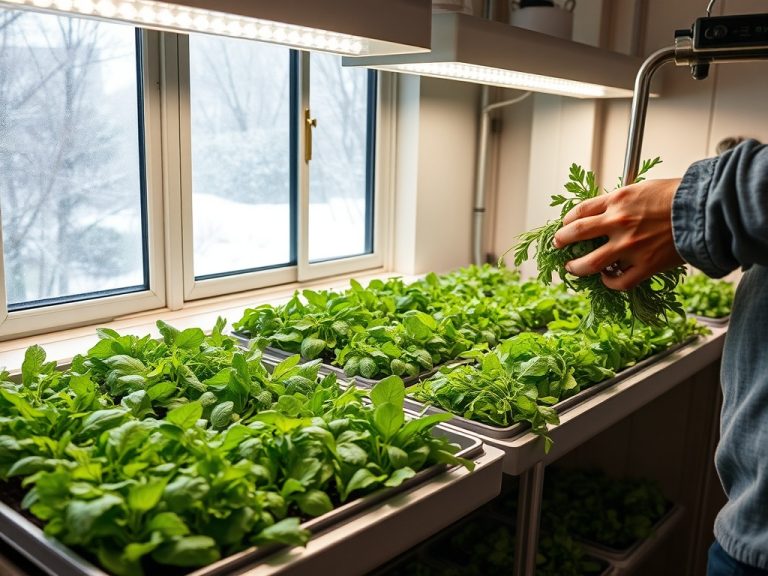
For most home seed-starting setups, an adjustable LED shop-style or purpose-built grow-light fixture that provides bright, even white or balanced-spectrum light is the most practical choice. The best fixture is the one that covers the entire tray evenly, can be kept close enough to seedlings, fits a timer, and can be raised as plants grow.
TL;DR
• LED fixtures are generally the strongest all-around choice for efficiency, low heat, long life, and flexible spectrum.
• Fluorescent fixtures remain useful when already owned or when up-front budget matters, but lamp output and replacement availability vary.
• Coverage and hanging height matter as much as the label on the fixture; weak or uneven light produces stretched seedlings.
What Seedlings Actually Need From a Light
Seedlings need sufficient light intensity, appropriate duration, and uniform coverage across the tray. University of Minnesota Extension notes that inadequate light causes elongated, thin growth and recommends artificial lighting for reliable seed starting. Its current indoor-lighting guidance lists LED and fluorescent sources as common options and explains that white or balanced light works for plants through multiple growth stages.
The practical shopping implication is simple: do not choose a fixture only because the box says “grow light.” Look for information about coverage, output, spectrum, mounting height, and power use. A light that is bright at the center but weak at the tray edges may require two fixtures or a narrower growing footprint.
For most seedlings, a timer is worth including from the start. Consistent light and darkness are easier to manage automatically, especially when trays are in a basement, utility room, or spare room where household lighting does not follow the plants' schedule.
LED Fixtures: Best All-Around for Most Home Setups
LEDs are usually the most versatile option for a new seed-starting station. They are energy efficient, long-lasting, available in many sizes, and generally produce less heat near plants than older high-intensity lighting. White or balanced-spectrum LED bars are also easier to work around than intensely purple fixtures in a shared living space.
Choose a fixture that matches the shelf width and tray footprint. Adjustable hanging chains or ratcheting hangers make it easier to keep the light near the seedling canopy and raise it as plants grow. A rigid desk lamp can work for a few cells, but it is harder to provide even coverage across a standard tray.
The main tradeoff is up-front price. Higher-output fixtures with better coverage can cost more than basic utility lights, so compare the usable lit area rather than wattage alone. Electrical efficiency describes how much light is produced from power; it does not guarantee that a particular fixture is suitable for your shelf geometry.
Fluorescent Fixtures: Still Useful for Budget or Existing Shelves
Fluorescent shop lights have a long history in seed starting and can still produce healthy seedlings when kept close to the canopy. They can be inexpensive if you already own compatible fixtures, and their broad linear shape spreads light well over trays. University extension guidance continues to recognize fluorescent lighting as a workable option.
The drawbacks are lamp replacement, lower efficiency compared with many modern LEDs, and more heat and fragility than an equivalent LED bar. Some older fixtures also become less convenient as compatible tubes disappear from local stores. If you already own a functioning fluorescent setup, there is no automatic need to replace it solely because LED is newer.
When buying new, compare total cost over the period you expect to use the setup, including replacement lamps and electricity. For a small seasonal seed rack, either technology can be practical if light reaches the seedlings evenly.
Panel, Bar, Bulb, or Clip-On: Match the Form to the Tray
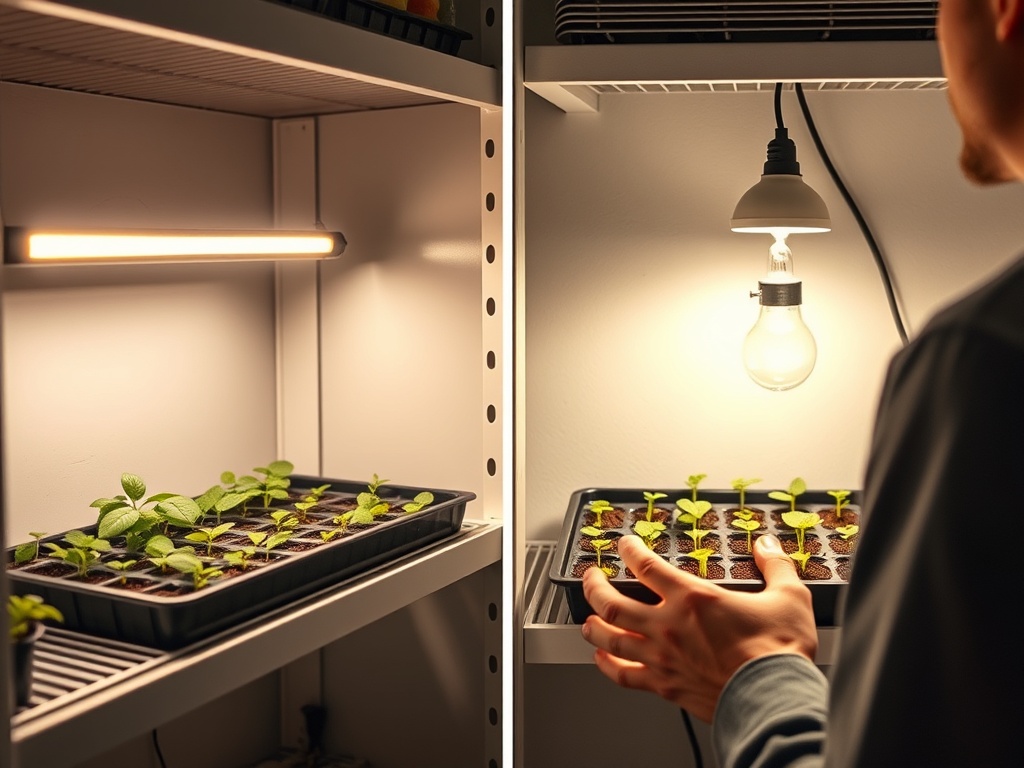
Long bars or shop-light fixtures suit shelving because they distribute light across rectangular trays. Panels can provide strong coverage but may require more vertical clearance and careful hanging. Screw-in grow bulbs are useful for a very small group of plants, while clip-on heads are convenient but often create bright spots and dim edges across a full seed tray.
If you start only a few herbs or flowers, a bulb in a safe, rated fixture may be sufficient. If you start multiple standard trays every spring, a shelf with linear bars is usually easier to scale.
Whatever form you choose, follow the fixture manufacturer's electrical, clearance, and mounting instructions. Avoid improvised wiring or hanging methods that put water trays directly over unprotected electrical connections.
| Light type | Best fit | Useful strengths | Watch-outs |
|---|---|---|---|
| Linear LED bars | One or more seed trays on shelves | Even coverage, easy to scale, low heat | Requires thoughtful spacing and a timer |
| LED panel | Broader single growing area | Wide footprint and strong output options | Can be excessive for a very small tray |
| LED bulb in rated fixture | A few pots or a small tray | Low entry cost and easy replacement | Narrower coverage; fixture position matters |
| Clip-on fixture | Temporary or very small setups | Flexible mounting | Stability and coverage vary by design |
A Simple Shortlist by Budget and Use Case
Budget starter: a basic LED or fluorescent shop-style fixture sized to one shelf, plus an outlet timer and adjustable hanging method. Best for gardeners starting one or two trays who value simplicity over specialized controls.
Mid-range flexible setup: linkable balanced-spectrum LED bars with adjustable height. This is a strong choice for two or more shelves because you can expand the system and keep light distribution consistent. Look for a practical on/off control and a fixture shape that covers the full tray width.
Higher-control setup: dimmable LED panels or bars with clearly published output and coverage information. This can be useful for gardeners who start different crops, raise larger transplants, or keep leafy greens indoors after seed-starting season. Extra controls are only valuable if you will actually use them.
Best Indoor Trees for Small Homes can help you decide whether the same lighting area may later need to accommodate taller decorative foliage rather than seedling trays.
Placement Matters More Than Marketing Language
University of Minnesota Extension recommends keeping seedling lights close to the plant tops and raising them as seedlings grow. Exact distance depends on the fixture because light intensity and heat differ. Use the manufacturer's recommended starting distance, then watch plant response: stretching suggests inadequate light, while bleaching or scorching can indicate excessive intensity or heat.
Keep trays centered under the fixture and rotate them if one edge consistently grows toward the middle. Reflective white shelving or nearby light-colored walls can improve the working environment, but they do not replace adequate fixture output. Leave enough air circulation around trays so warmth and moisture do not create stagnant conditions.
Also plan for watering. Electrical connections, power strips, and timers should be kept away from spills and positioned according to electrical-safety guidance. A waterproof tray under containers helps protect shelves and floors, but it is not a substitute for safe outlets and properly rated equipment.
If severe weather frequently causes outages where you live, Storm Season Prep for Yards, Roofs, and Gutters provides a broader household-preparedness checklist for the outdoor systems and hazards that can affect power-dependent growing setups.
Choose the Light You Can Position Consistently
The best grow light for seedlings is not necessarily the brightest or most expensive model. It is the fixture that gives your tray even light, stays at a useful distance as plants grow, runs on a consistent schedule, and fits your available shelf safely.
For most new setups, a balanced-spectrum LED bar or shop-style fixture is the practical default. If you already have functional fluorescent lights, they can still serve well. Buy around tray coverage and adjustability first, then compare efficiency, controls, and price.
Practical next step: Measure your tray and shelf before shopping, then choose an adjustable fixture that can light the full growing area evenly and safely throughout the seedling stage.
Informational and educational only. Follow the lighting manufacturer's electrical, mounting, heat-clearance, and moisture-safety instructions, and use qualified electrical help when required.[/