Corrosion can reduce steel section, crack concrete cover, weaken bond, stain surfaces, and shorten service life, but the exact risk depends on exposure, detailing, materials, moisture, chlorides, carbonation, and maintenance. In both reinforced concrete and structural steel, corrosion is a materials problem and a maintenance problem. It should be evaluated from the conditions that allow it to start, the signs that show it is active, and the repair strategy that fits the structure.
Key Takeaway: Use the article's checklist to turn corrosion reinforced concrete steel into a practical review of scope, risk, schedule, and handoff requirements before work begins.
Why Steel Corrodes in Built Environments
Steel corrodes when electrochemical conditions allow oxidation to occur. In reinforced concrete, embedded steel is usually protected by the alkaline environment of sound concrete. That protection can be disrupted when chlorides reach the reinforcement or carbonation changes the chemistry around the steel. In exposed structural steel, coatings, drainage, details, and environmental exposure strongly influence risk.
NIST research continues to examine corrosion risk in cement-based materials, especially as newer binders and mixes enter wider use. That is a reminder to avoid one-size-fits-all claims. Corrosion behavior depends on materials, exposure, and design details.
How Corrosion Damages Reinforced Concrete
When reinforcing steel corrodes, the corrosion products can occupy more volume than the original steel. This expansion may crack or spall the concrete cover. Once cracks form, more moisture and contaminants can reach the reinforcement, which can accelerate deterioration if not addressed.
Visible symptoms include rust staining, cracking along rebar lines, delamination, spalling, exposed reinforcement, and hollow-sounding concrete. These signs do not automatically reveal the full structural condition. A qualified evaluation may include visual review, sounding, cover measurement, chloride testing, half-cell potential testing, corrosion-rate assessment, or other methods selected for the structure.
For additional technical context, teams can compare project assumptions with NIST corrosion research in concrete and FHWA corrosion protection information, then verify what applies locally before using those resources as a project requirement.
How Corrosion Affects Structural Steel
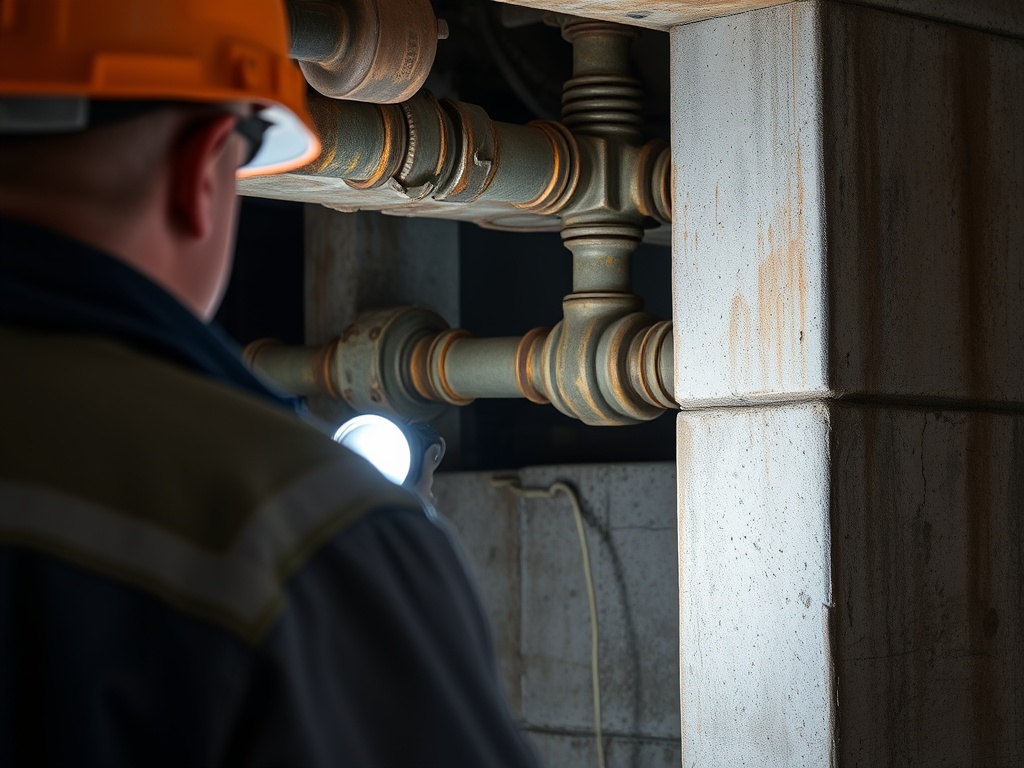
For structural steel, corrosion can reduce member thickness, damage connections, weaken fasteners, and create pack rust between connected plates. Water traps, failed coatings, salt exposure, poor drainage, and inaccessible details are common contributors. Steel does not have to look dramatic to deserve attention; section loss at a connection can matter more than widespread surface staining elsewhere.
Maintenance teams should document location, severity, moisture source, coating condition, and whether the corrosion appears active. Photographs should include context and scale, but they should not replace inspection by qualified professionals when capacity, safety, or code compliance may be affected.
Inspection Documentation Before Repair
Before repairs begin, document the location and extent of damage. Photos, sketches, sounding maps, test results, moisture observations, and prior repair history can help the project team understand patterns. A repair that treats isolated symptoms may fail if the real cause is ongoing water entry, chloride exposure, poor cover, or coating failure.
Documentation also helps owners compare future conditions. If the same area cracks again, the team can review what was repaired, what materials were used, and whether the source of exposure was corrected.
How corrosion affects reinforced concrete and st Table
| Observed condition | Possible meaning |
|---|---|
| Rust staining | Moisture and corrosion products may be reaching the surface |
| Cracking along reinforcement | Embedded steel expansion may be stressing concrete cover |
| Coating failure on steel | Protective barrier may no longer be controlling exposure |
| Section loss | Structural capacity may need professional evaluation |
Why Compatibility Matters in Repairs
Repair materials must be compatible with the existing structure and exposure. Strength alone is not enough. Shrinkage, permeability, bond, thermal movement, galvanic effects, coating adhesion, and curing conditions can influence performance. The best-looking patch can still fail if it traps moisture or moves differently from the surrounding material.
For steel, coating systems should be selected based on surface preparation, environment, access, and expected maintenance. Skipping surface preparation is one of the fastest ways to undermine a repair.
Where Corrosion Often Hides
Corrosion often appears first where moisture lingers: balcony edges, parking decks, beam pockets, base plates, roof penetrations, coastal exposures, splash zones, unsealed joints, and areas below leaking equipment. These locations deserve closer attention during routine inspections because small signs may point to larger concealed deterioration.
Maintenance teams should also watch for repeated patching in the same area. Recurring stains or cracks usually mean the exposure source has not been controlled.
Questions Before Selecting a Repair Method
Before choosing a repair, ask what caused the corrosion, whether the source is still active, how far damage extends, and what inspection is needed after removal begins. Ask how the repair material, coating, or protection method matches future exposure.
These questions help prevent cosmetic fixes from being mistaken for durable repairs. They also support clearer bids because contractors understand the expected investigation and documentation.
When Monitoring Is Better Than Immediate Replacement
Not every corrosion finding requires immediate replacement. In some cases, qualified professionals may recommend monitoring, coating repair, drainage correction, or limited patching. The decision should be based on severity, structural role, exposure, and change over time, not appearance alone.
Repair Is Not Just Cleaning Rust
Repairs may include removing unsound concrete, cleaning or replacing reinforcement, patching with compatible repair materials, adding protective coatings, improving drainage, controlling chloride exposure, installing cathodic protection, or replacing damaged steel. The right approach depends on cause, severity, access, structural role, and expected future exposure.
If deterioration requires removal work, cost planning may overlap with demolition and disposal cost estimating. Hidden damage, hazardous materials, access constraints, shoring, disposal rules, and repair sequencing can all influence scope.
Field Clues That Should Trigger Escalation
Cracks that widen, spalls over occupied areas, exposed reinforcing steel, corrosion at load-bearing connections, repeated water leaks, and damage near balconies, garages, bridges, marine areas, or deicing-salt exposure deserve prompt review. The concern is not only appearance. Corrosion can affect capacity, durability, and occupant protection.
During investigation or repair, crews may face falling debris, silica dust, lead-based coatings, sharp steel, confined spaces, or overhead work. A clear job hazard analysis for field supervisors helps connect the repair method with practical controls before work begins.
Maintenance Actions That Slow Recurrence
- Fix water entry and drainage problems before patching finishes.
- Keep coatings intact and repair failed areas before corrosion spreads.
- Seal cracks or joints when appropriate for the structure and exposure.
- Avoid trapping moisture behind new finishes or graphics.
- Use compatible repair materials and follow project-specific specifications.
- Maintain inspection records so repeat damage can be tracked over time.
A Responsible View of Deterioration
Corrosion is manageable when it is found early, evaluated correctly, and tied back to its cause. Cosmetic treatment alone may hide symptoms without slowing the process. On the other hand, not every stain signals structural danger. The responsible path is measured investigation.
This article is educational only and is not structural engineering, safety, legal, or compliance advice. When corrosion affects load-bearing elements, overhead areas, occupied spaces, or repeated moisture exposure, consult qualified professionals before selecting repairs.