
Expensive gear can improve reliability, control, and production value, but it does not replace practice. New photographers and video creators usually grow faster by mastering light, composition, timing, sound, and editing with the tools they already have.
The useful answer before buying anything
If your current camera or phone can expose, focus, record, and export usable files, it can teach you the core skills. Harvard's digital photography course description lists fundamentals such as exposure, composition, lighting, editing, color correction, metadata, and workflow, which are not solved automatically by a more expensive body. Better gear helps most when you already know what limitation is blocking you.
Myth one: A better camera will make the work look professional
A better camera can give you cleaner low-light files, higher dynamic range, faster autofocus, better codecs, and more durable handling. Those are real advantages. They do not choose a subject, find better light, build trust with a portrait sitter, stabilize a story, or edit a weak sequence.
The practical downside is delay. New creators postpone shooting until they can afford the ideal kit. During that waiting period, they lose the repetition that builds taste. Ten thoughtful practice shoots with a phone can teach more than owning a premium camera that stays in a bag.
Myth two: You need every lens before choosing a style
Lens choice shapes perspective, working distance, depth, and visual emphasis. Yet a fixed lens or a basic zoom can be an advantage because it forces constraints. With fewer choices, you learn how distance, angle, background, and light change the frame.
A beginner who keeps changing lenses to solve every problem may never learn to move their feet or simplify a composition. Before buying another lens, review your last fifty images. If you can name the exact repeated problem, such as needing longer reach for stage events or wider coverage in small rooms, the purchase has a reason.
| Gear belief | Reality | Practice alternative |
|---|---|---|
| I need full frame first | Sensor size helps, but light and intent matter more | Shoot the same subject in three light conditions |
| I need many lenses | One lens can build discipline | Make a 30-frame series with one focal length |
| I need a pro mic later | Bad audio can ruin video early | Practice clean voice recording now |
| I need paid presets | Editing taste comes from decisions | Re-edit one image five different ways |
Image Placeholder 1: Small creator kit on a table
Myth three: Mobile work is not real creative work
Mobile filmmaking and phone photography are not second-class by default. Phones are limited in sensor size, optical flexibility, ergonomics, and audio control, but they are fast, discreet, and always available. For many creators, that access is the difference between practicing daily and waiting for special occasions.
The same idea applies to adjacent creative fields. A strong creative brief for an illustrator matters because it clarifies purpose before tools. A strong photo project works the same way: the concept and constraints should lead the gear choice.
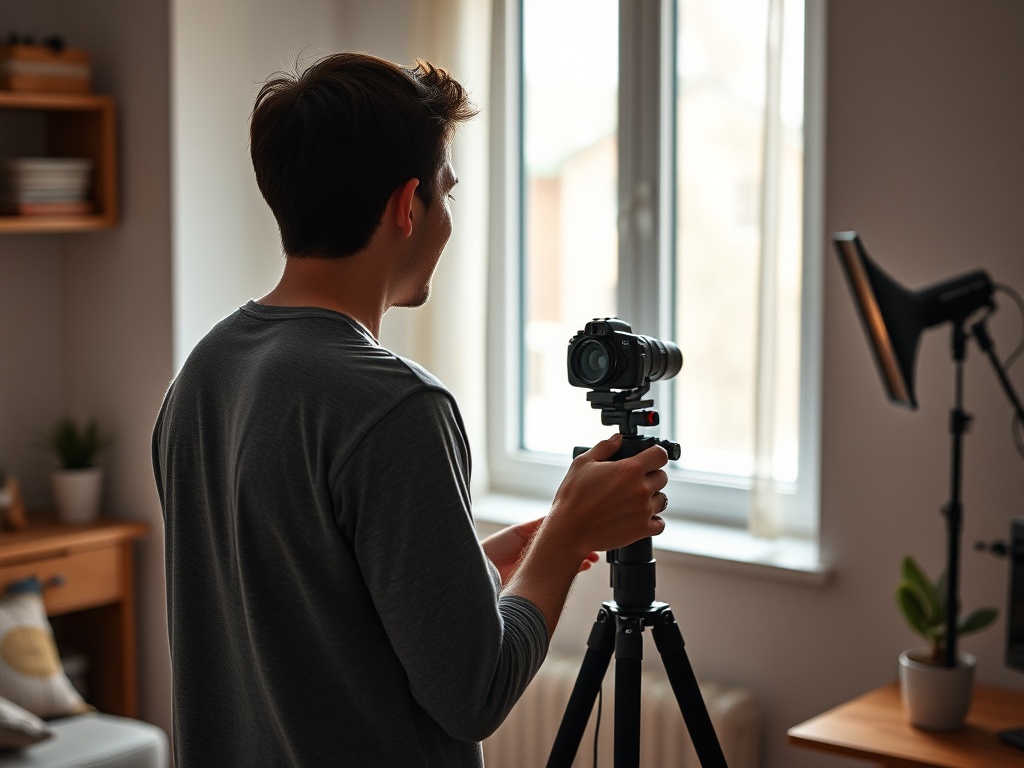
Myth four: Editing software will fix weak capture
Editing can refine color, crop, pacing, and sound. It cannot fully repair missing moments, poor focus, chaotic framing, unusable audio, or a story with no point. New creators often spend hours searching for presets because it feels easier than returning to the fundamentals.
Use editing as feedback. If every image needs heavy noise reduction, practice exposure and lighting. If every video needs aggressive stabilization, practice grip, posture, and movement. If every edit feels flat, practice shooting with stronger foregrounds, cleaner backgrounds, and clearer subjects.
Myth five: You must look professional to be taken seriously
Professionalism is mostly reliability and judgment. Showing up prepared, respecting subjects, backing up files, meeting deadlines, and communicating clearly matter more than having the largest rig. Gear can signal seriousness, but it can also get in the way if it slows you down or makes people uncomfortable.
The National Press Photographers Association describes its work as advancing visual journalism and promoting its public-service role through visual reporting. That mission depends on ethics, access, accuracy, and timing, not only on equipment price.
Image Placeholder 2: Creator practicing light with simple setup
Myth six: Upgrading means you are improving
Buying can feel like progress because it is visible. Practice progress is quieter. You may notice that you miss fewer shots, see better backgrounds, direct subjects with more calm, or edit faster because your capture is cleaner. Those improvements should guide upgrades.
Use a three-question buying test: What exact limitation keeps appearing? Can skill, planning, rental, or borrowing solve it first? Will the upgrade create new responsibilities, such as storage, insurance, weight, batteries, or learning time? If the answer is clear, buy or rent with confidence. If not, keep practicing.
A practice-first path that still respects gear
Gear is not the enemy. Gear envy is. Build a simple routine: one weekly assignment, one constraint, one review session, and one specific lesson. Photograph the same place at morning, noon, and evening. Record a one-minute interview and focus only on clean sound. Make a short sequence that tells a story in six shots. Revisit your results after a week instead of judging them in the emotional rush of the shoot.
The creator who practices with modest tools is not falling behind. They are building the judgment that will make future gear worth owning. When the upgrade finally comes, it will solve a known problem rather than serve as permission to begin.