Clean aligners stay clearer when you rinse them every time they come out, brush and floss before reinserting them, and clean the trays gently with the product your dentist or orthodontist recommends. Odor usually means saliva, plaque, food residue, or bacteria are staying on the trays too long.
Aligner Care Snapshot
The best aligner-cleaning routine is consistent, gentle, and cool to lukewarm. Avoid hot water, abrasive toothpaste, colored mouthwash, and eating or drinking anything except water while trays are in unless your clinician gives different instructions.
The Daily Cleaning Routine
Clear aligners are removable plastic trays that fit closely over the teeth. The American Association of Orthodontists explains that clear aligners are worn over the teeth and are removed for eating, drinking, brushing, and flossing in its overview of aligner treatment. Because the trays sit tightly against enamel, anything trapped under them can stay there for hours.
Use this basic routine unless your dental team gives a brand-specific plan:
- Remove the aligners before eating or drinking anything other than water.
- Rinse the trays with cool or lukewarm water as soon as they come out.
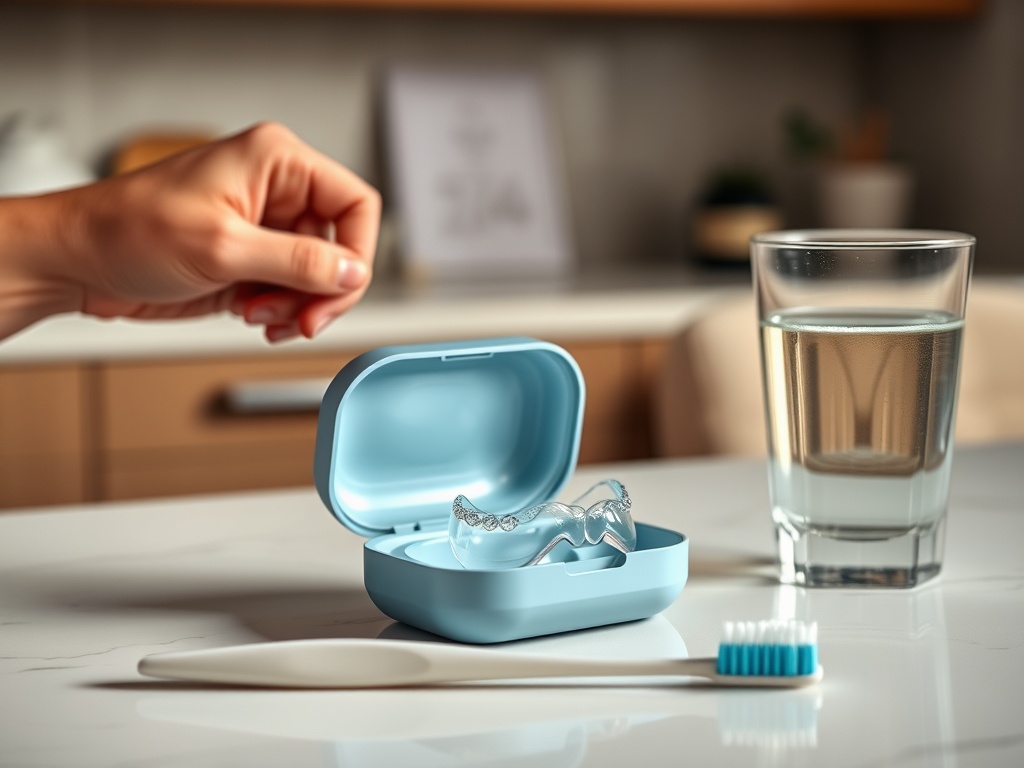
- Store them in their case, not a napkin, pocket, purse, or open counter.
- Brush and floss your teeth before putting trays back in.
- Clean the trays at least daily with a soft brush and approved cleanser.
- Rinse thoroughly before reinserting.
Do not use hot or boiling water. Heat can distort plastic, which may affect fit. The AAO’s retainer care guidance makes the same point for plastic retainers: high temperatures can warp or distort the appliance. Aligners and retainers are not identical, but the caution is practical for any thin, custom-fitted plastic oral appliance.
What to Use and What to Avoid
A soft toothbrush can help remove film, but toothpaste may be too abrasive for some trays and can create tiny scratches that make aligners look cloudy. Ask whether your clinician recommends clear, unscented mild soap, aligner cleaning crystals, retainer cleaner, or another product. Rinse carefully so no cleanser remains on the tray.
Avoid colored mouthwash, harsh cleaners, bleach, alcohol-heavy products, and anything not meant for oral appliances. Do not put aligners in the dishwasher, microwave, boiling water, or direct sun. Do not leave them near pets. Dogs often chew appliances, and a damaged tray can interrupt treatment.
If the aligner has a white, chalky film, the issue may be mineral buildup, dried saliva, or insufficient cleaning. If it smells sour or rotten, check both the tray and your mouth. The tray may be dirty, but odor can also come from gum inflammation, decay, dry mouth, or a lapse in brushing before reinsertion. That same source-control thinking applies to morning bad breath when odor keeps returning after quick fixes.
Mistakes That Make Trays Cloudy
| Mistake | What can happen | Better habit |
|---|---|---|
| Drinking coffee, tea, soda, or juice with trays in | Staining and trapped sugar or acid | Remove trays and rinse before reinserting |
| Skipping brushing after meals | Food and plaque sit under the aligner | Brush or at least rinse well when brushing is impossible |
| Cleaning with toothpaste aggressively | Cloudy scratches can hold film | Use a soft brush and approved cleanser |
| Using hot water | Tray shape may change | Use cool or lukewarm water |
| Leaving trays out of the case | Loss, contamination, or pet damage | Use the case every time |
When the Process Is Manageable at Home
Most aligner odor is manageable if the tray fits, is not cracked, and the mouth is healthy. Improve the timing first. Rinse the tray immediately, clean it daily, brush before reinsertion, and keep water nearby. If you are wearing aligners as part of cosmetic planning before whitening or veneers, keep in mind that tooth color and tooth movement should be sequenced carefully. That is one reason a smile consultation may discuss choosing a cosmetic dentist for veneers, whitening, or a smile makeover before you start elective changes.
The AAO guidance on clear aligner therapy emphasizes that aligners rely heavily on patient cooperation. Cleaning is part of that cooperation. A tray left out for long periods may delay wear time; a tray placed over plaque may increase irritation risk; and a damaged tray may not move teeth as intended.
When to Call the Dentist or Orthodontist
Call the office if an aligner cracks, warps, no longer seats fully, rubs a sore spot, smells bad despite cleaning, or is lost. Also call if gums bleed, teeth feel unusually loose, attachments come off, or pain feels sharp instead of pressure-like. Do not jump to a new tray early unless your clinician tells you to.
For urgent symptoms, seek care sooner: facial swelling, fever, pus, severe tooth pain, allergic-type swelling, or trouble breathing or swallowing. Those symptoms are not normal aligner adjustment problems. If your office uses scans or digital monitoring, it may incorporate technology similar in spirit to AI-assisted dentistry, but a dentist or orthodontist still needs to judge whether the tray, tooth, or gum tissue requires attention.
Travel can disrupt aligner hygiene, so pack the case, a travel toothbrush, floss, and a small approved cleanser before leaving home. If you cannot brush immediately after a meal, rinse your mouth thoroughly, rinse the trays, and brush as soon as possible. Do not let a busy day turn into hours of trays sitting dry in a napkin or going back over food residue. If you are in a setting where brushing is awkward, keeping the trays safely stored until you can clean your teeth is usually better than trapping lunch under them for the rest of the afternoon. Consistency protects both the clarity of the trays and the health of the enamel underneath.
Keep the Trays Working for You
Aligners are easiest to keep clear when cleaning becomes automatic. Rinse, case, brush, clean, rinse again, and reinsert only over clean teeth. If odor, cloudiness, or fit problems keep returning, bring the trays to your next appointment so the dental team can inspect both the appliance and the mouth.