The durable way to reduce moss in a shady lawn is to correct the conditions that weaken turf: insufficient light, poor drainage, compaction, low fertility where confirmed by testing, or a grass species poorly matched to the site. Removing moss can improve appearance temporarily, but it will return if the site still favors moss more than grass.
TL;DR
• Treat moss as a site-condition signal, not as the primary cause of thin turf.
• Improve light and drainage where practical, then reseed or sod with grass suited to the available conditions.
• If dense shade cannot be changed, replace struggling turf with a shade-tolerant groundcover, mulch, or another appropriate landscape use.
First Confirm That Moss Is the Problem You Think It Is
Moss forms a low green mat and does not have the same roots or growth habit as turfgrass. It commonly expands where grass is thin, especially in shade and moist conditions. Before applying anything, check whether the area is actually moss, algae, a broadleaf weed, or simply dormant grass mixed with organic debris.
Oregon State University Extension explains that moss often reflects environmental conditions and that a dense, thriving lawn is the long-term defense. In heavily shaded areas, the key constraints are commonly light and soil drainage. That means killing moss without improving the site can create bare soil that soon becomes mossy again.
Compare the mossy patch with sunnier turf nearby. If grass becomes dense as soon as light improves, shade is likely a major factor. If moss follows a low, wet path through the yard, drainage deserves attention as well.
Measure Shade Through the Growing Season
A lawn that receives spring sun may become deeply shaded after trees leaf out. Observe the site at several times of day in late spring and summer. Buildings, fences, evergreen canopies, and dense deciduous branches can all reduce the light available to turf.
Where appropriate, selective pruning by a qualified arborist can increase filtered light without damaging the tree. Do not remove major limbs simply to save a small lawn patch. If the tree is valuable and the shade is permanent, changing the groundcover may be the better landscape decision.
Drought-Tolerant Landscaping for Hot, Dry Climates reinforces the same site-first principle from the opposite moisture extreme: match plants and water management to the conditions the property actually has.
Check Drainage and Compaction Before Adding Soil Products
Push a screwdriver or soil probe into the ground after normal rainfall. If water ponds for long periods or the probe is difficult to insert, compaction or poor drainage may be contributing to weak turf. Core aeration can help compacted lawn soil where appropriate, but it will not fix a buried hardpan, a blocked drain, or incorrect grading.
Do not assume acidic soil is the cause of moss. Moss can grow in a range of soil conditions. If you suspect pH or nutrient problems, use a soil test before applying lime or fertilizer. Adding lime without a test may move pH away from the range your turf species needs.
Keep irrigation in mind too. A shady lawn usually dries more slowly than a sunny one. If the entire irrigation zone runs on the sunny-area schedule, the shaded patch may stay unnecessarily wet.
Remove Existing Moss at the Right Time
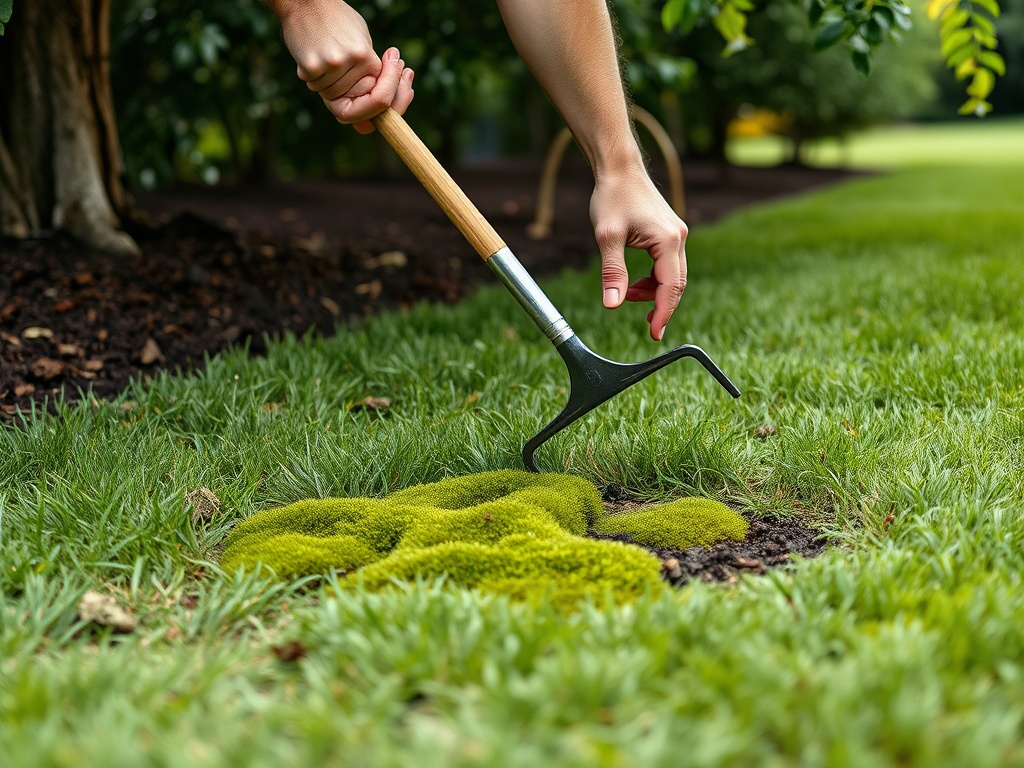
Once you have a plan to improve growing conditions, rake or dethatch the moss from small areas. Moss has a shallow hold compared with turf, so mechanical removal can expose the soil surface. Work when the soil is not waterlogged and when the grass can recover from disturbance.
For larger lawns, power dethatching can remove substantial material, but aggressive work also stresses turf. Follow equipment instructions and avoid scalping healthy grass. Chemical moss products may have a role in some situations, but labels, turf compatibility, environmental restrictions, and runoff concerns vary. Identify the active ingredient and follow the product label exactly.
Removal is a reset, not the cure. Plan reseeding, sod, or an alternative planting so bare soil is not left open for erosion and weed invasion.
Rebuild Turf Only Where Turf Can Actually Compete
Choose a grass species or blend suited to your region and the available light. Even shade-tolerant turf still needs a minimum amount of light and reasonable drainage. Seed at the locally recommended season so seedlings have the best chance to establish before heat, drought, or winter stress.
Prepare seed-to-soil contact without burying seed too deeply, keep the surface consistently moist during germination, and reduce traffic while seedlings establish. Once the new turf is growing, adjust mowing height for the species and avoid removing too much leaf area at once. Taller mowing within the recommended range can help shade the soil and support deeper roots.
If drainage rather than shade is the main issue, solve the water problem first. New seed will not overcome saturated soil.
Know When to Stop Fighting the Site
Some corners are simply too shaded for a durable lawn. Under dense tree canopies, between close buildings, or on the north side of a high wall, repeated reseeding can become an expensive cycle. In those areas, consider a regionally appropriate shade groundcover, woodland planting, mulched bed, path, or seating area that does not depend on turf.
When converting the area, protect tree roots. Avoid deep soil additions, trenching, or repeated tilling beneath mature trees. Choose shallow-impact methods and plant species suited to the dry-shade or moist-shade conditions that actually exist.
Storm Season Prep for Yards, Roofs, and Gutters treats hazardous limbs and storm debris as a safety issue, which is separate from routine moss correction under healthy shade trees.
Prevent Moss From Regaining the Advantage
After renovation, keep the turf competitive. Water according to soil moisture rather than habit, avoid excessive nitrogen in deep shade, manage leaves promptly in fall, and reduce traffic where soil compacts easily. Recheck light conditions as trees grow because a site that supported grass five years ago may be much darker now.
Spring or autumn moss patches are useful feedback. Instead of immediately reaching for a product, ask what changed: more shade, wetter soil, lower turf density, heavy traffic, or a drainage problem. Correcting that pressure makes the result last longer than surface treatment alone.
Aftercare: Help Grass Occupy the Space Moss Leaves Behind
Removing moss creates an opening, not a lasting lawn improvement by itself. After correcting drainage, compaction, fertility, mowing, or shade issues as far as practical, repair thin turf with a grass type suited to the available light and your region. Keep new seed evenly moist during establishment according to local recommendations, then return to a watering pattern appropriate for established turf. Avoid piling on fertilizer simply to force fast growth in shade. The goal is steady turf density under realistic light conditions; if that density cannot be maintained, a non-turf planting may be the lower-maintenance choice.
Let the Site Decide Whether Grass Belongs There
Moss is often telling you that the lawn is losing a competition over light, moisture, or soil conditions. Improve those conditions where practical, remove moss, and re-establish turf only if the site can support it.
Where deep shade is permanent, a deliberate non-lawn solution can be healthier, lower maintenance, and more attractive than repeatedly forcing grass into an unsuitable location.
Practical next step: Observe the mossy area after rain and through a full day of summer light, then decide whether the first fix is drainage, compaction, shade reduction, or a change away from turf.
Informational and educational only. Turf species, pesticide and moss-control labels, drainage rules, tree-work practices, and planting recommendations vary by region and site.[/